
Getting from Madrid airport to Madrid centre is a twenty-minute problem that most people spend an hour solving, usually because the advice they arrived with is out of date. One thing in particular has changed and almost nobody has noticed: the airport train no longer runs straight into Atocha. If you have a connection to catch, or you booked accommodation near a station because a guide told you the Cercanías went there, read the train section before you land.
What follows is every way from Madrid-Barajas into the centre — Metro, Cercanías, the yellow express bus, taxi and ride-hailing — with what each one actually costs, how long it actually takes, and which one makes sense for where you are staying. All fares, times and routes were checked on 15 August 2026.
The short answer
- Staying in the centre, arriving during the day, travelling light → Metro, around €5, 14 minutes to Nuevos Ministerios.
- Heading for Chamartín, or a train out of it → Cercanías, €1.70, 15 minutes.
- Heading for Atocha → Metro, or a taxi. The airport train only reaches Atocha twice a day.
- Two or more people, or a lot of luggage → taxi, €33 flat.
- Landing after 01:30 → the yellow bus to Cibeles, or a taxi.
Arriving at Madrid-Barajas Adolfo Suárez Airport
Madrid-Barajas is one of the busiest airports in Europe and the main gateway into the city. It sits about 12 kilometres north-east of the centre, which is close by capital-city standards, and it has four passenger terminals — T1, T2, T3 and T4 — plus the T4 satellite, T4S.
The thing worth understanding before you land is that Barajas is not organised by international versus domestic. It is organised by Schengen versus non-Schengen, and that split runs through both halves of the airport.
Which terminal is which
T1, T2 and T3 form one connected building.
Terminals
- T1 handles non-Schengen flights (gates A and B).
- T2 handles Schengen flights (gates C, D and E). T3 adjoins it.
- Moving from T2 to T1 means passing passport control in T1, next to gates C34–C38.
T4 and T4S are the other half, and this is where the confusion starts.
Terminals
- T4 handles domestic and Schengen flights (gates H, J and K).
- T4S, the satellite, handles non-Schengen long-haul — the Americas, Asia, everything outside the Schengen Area. So T4 is not “the domestic one”: the T4/T4S pair is the airport’s intercontinental hub.
- T4 and T4S are home to Iberia and the rest of the IAG group, along with its oneworld partners — British Airways, American, Qatar, Finnair, Cathay Pacific — and a handful of airlines that connect with Iberia’s hub, among them Emirates, Etihad, LATAM and Avianca. If you are flying anything else, you are almost certainly in T1 or T2.
Getting from Terminal 4 to 4S, or from T1 to T4
Two different journeys, and people mix them up constantly.
Terminal 4 to T4S is inside the same building complex: a free automatic underground train, running all year, every 4 to 12 minutes depending on the hour. The ride takes about five minutes. Go down to level -1, and expect passport control on the way.
T1, T2 or T3 to T4 is a bus ride, not a walk. A free shuttle runs 24 hours a day, every day: every 5 minutes from 06:00 to 22:00, every 20 minutes overnight. It stops at T1 (departures, level 1), T2 (departures, level 2) and T4 (departures, level 2). Allow 2 minutes T1 to T2, 8 minutes T2 to T4, 10 minutes T1 to T4. You cannot walk between the two halves of the airport.
There is also a second free bus, running T1 arrivals directly to T4S, for passengers in transit — it needs a boarding pass. Aena publishes route maps for all of them, and they are worth a glance before you land.
If you are not sure which terminal your airline uses, check Aena’s own airline directory before you fly. It is the only list that stays current.
Madrid airport to the train station: read this first
This is the part every other guide still gets wrong, so here it is plainly.
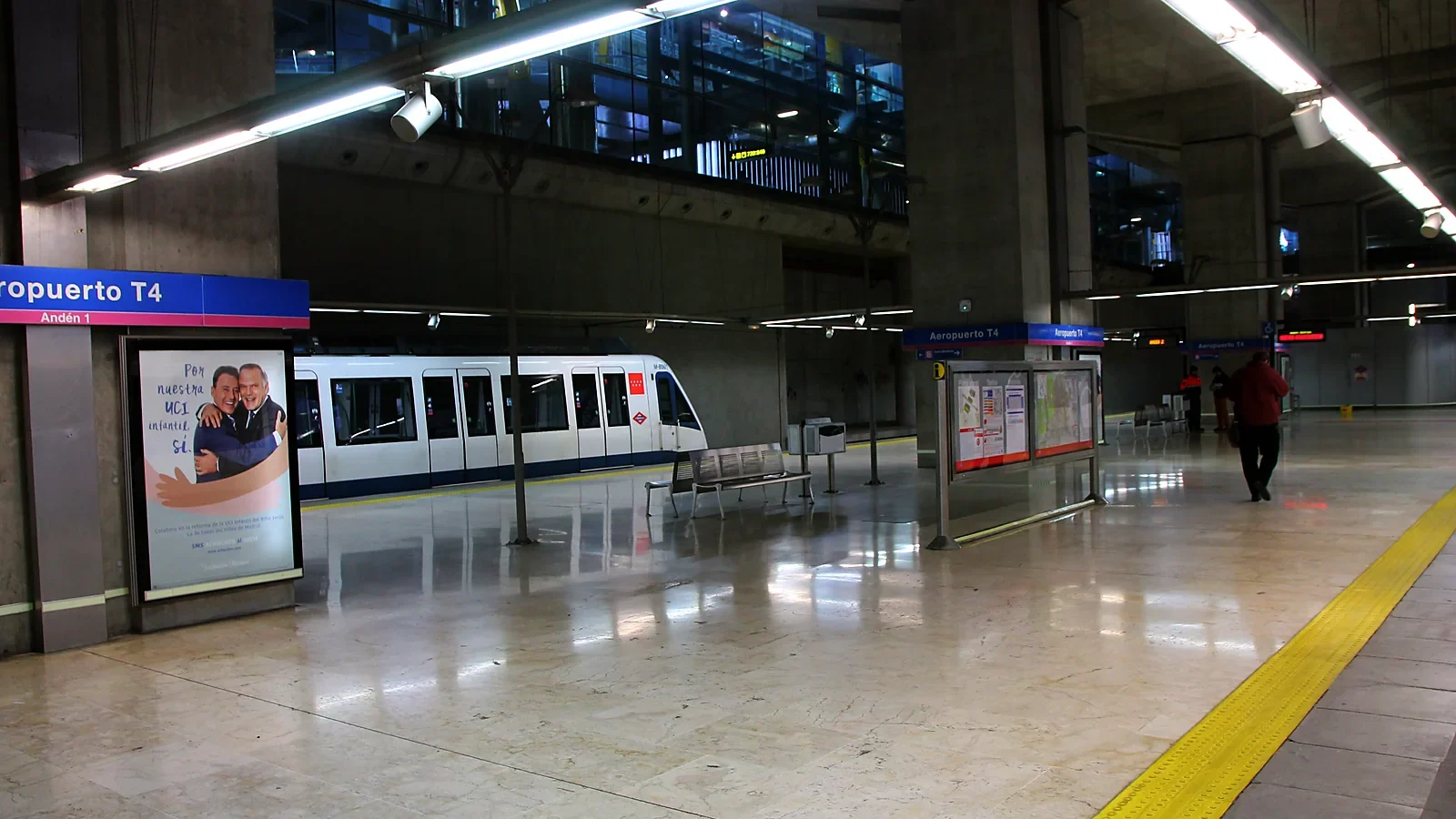
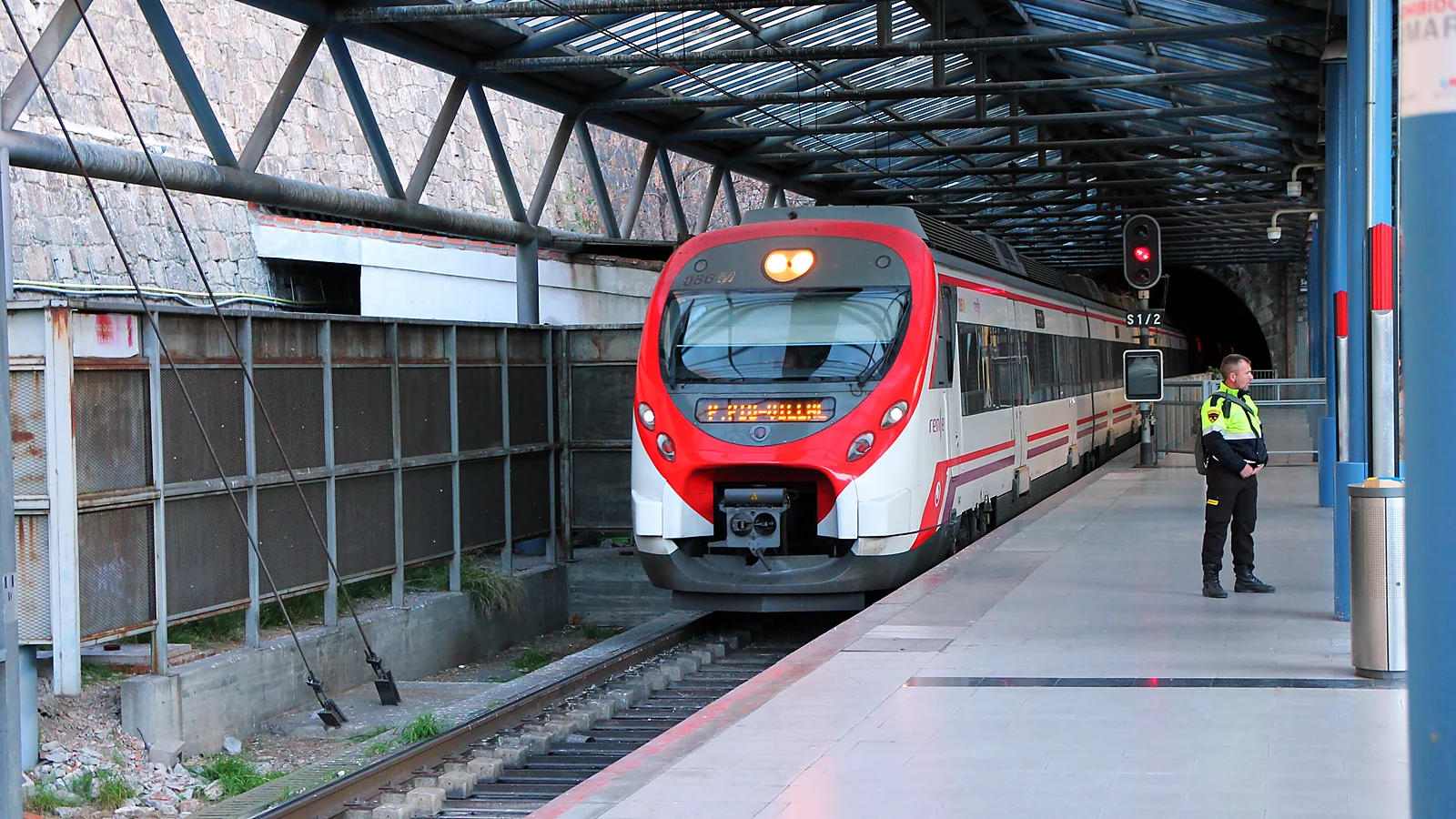
As of 15 August 2026, Cercanías line C-1 runs only as a shuttle between Chamartín station and Airport T4. Four stops: Chamartín-Clara Campoamor, Fuente de la Mora, Valdebebas, Airport T4.
It does not call at Nuevos Ministerios, Recoletos, Atocha or Príncipe Pío — with two exceptions a day, one in each direction:
- 05:16 from Atocha, arriving Airport T4 at 05:45
- 00:10 from Airport T4, arriving Atocha at 00:39
Everyone else changes at Chamartín.
So which station should you aim for? The closest train station to Madrid airport is Chamartín, 15 minutes away. If your onward train leaves from Chamartín, the Cercanías is the obvious answer and it is almost free. If your onward train leaves from Atocha, do not take the airport train — take the Metro or a taxi, because the change at Chamartín turns a 15-minute trip into 33 to 39 minutes with a suitcase.
Heads up
Why the line was cut back — and why you should check on the day
None of this is an accident, and it is not a summer closure that will be over by the time you travel.
Getting in is the easy half; the days themselves are the other one. Things to do once you’re in the city, if you haven’t got that far yet — or the Hidden Madrid Bike Tour, three hours across the city, if your first morning is free.
Spain is building a high-speed rail link into Terminal 4, connecting Chamartín with the airport, and the C-1 shares that corridor. Renfe’s own warning on the line says it plainly: the service is affected by the high-speed works, with occasional temporary closures and variations to the usual timetable. The line was formally cut back to the Chamartín–Airport T4 section, and the works are still running.
Two practical consequences. First, this is the normal state of affairs, not a blip — plan around it. Second, the timetable you look up in advance is not guaranteed to be the one running on the day. If your flight or your onward train is tight, check Renfe the morning you travel, and give yourself more margin than the 15 minutes the journey is supposed to take.
And the station at the other end is a building site too. Chamartín is midway through a €560 million transformation: a new concourse opened in June 2026, the glazed vault above it is still going up, and the foundations and pillars are already in for the future covering of the rail yard — the deck on which the Madrid Nuevo Norte development will eventually be built. Trains have kept running throughout, and the works are an improvement rather than a disruption. But entrances, routes to platforms and signage have all moved, and will move again. If you have not passed through Chamartín in the last year or two, do not assume you know where anything is. Add ten minutes.
When the high-speed line finally opens, all of this gets better. Until then, the airport train is a shuttle and Chamartín is a work in progress.
Cercanías, in practice
Train
- Fare: €1.70. The €3 airport supplement that applies on the Metro does not apply on Cercanías. This is the single most common mistake travellers make.
- Airport T4 to Chamartín: 15 minutes, every 15 minutes, 72 trains a day in each direction.
- With a change at Chamartín: roughly 24–30 minutes to Nuevos Ministerios, 33–39 minutes to Atocha.
- First train out of T4: 05:57. Last: 00:10. The last train towards the airport leaves Chamartín at 23:50.
- The station is inside T4, level -1. Arriving at T1, T2 or T3, take the free shuttle bus first.
- It is free if you hold an AVE ticket and are connecting to a flight.
- Paying contactless gets you 40% off from your fifth journey in a calendar month. Tap in and tap out.
Comfortable seats and proper luggage space — it is the most civilised way in, as long as Chamartín is on your route.
Timetables and any engineering work are published on Renfe’s Cercanías Madrid pages. Check them the week you travel rather than trusting a guide — including this one.
Madrid airport by Metro: line 8
The default choice, and the fastest of the cheap ones.
Metro
- Stations: Airport T1-T2-T3 (inside Terminal 2, level 1) and Airport T4 (level -1).
- What you actually pay: tap a bank card straight on the barrier and it is €1.50 plus the €3 airport supplement — €4.50, with nothing to buy first. At the machine instead, a single ticket is €1.50–€2.00 plus the supplement, and the first time you also pay €2.50 for the Multi card, because the ticket has to sit on one.
- Journey time: 14 minutes from T1-T2-T3 to Nuevos Ministerios, 18–19 minutes from T4. Add your onward connection.
- Where it leaves you: Nuevos Ministerios, the end of line 8, where you change to lines 6 and 10 and to most Cercanías lines. For Sol or Gran Vía, allow another ten minutes or so.
- Hours: 06:00 to 01:30. First train out of the airport 06:05; last train 01:33 from T4 and 01:37 from T1-T2-T3. Onward connections are only guaranteed until 01:30, so the 01:33 can leave you stranded halfway.
Aena’s own Metro page has the station locations and current times.
If you are staying a few days there is a Tourist Travel Pass that covers unlimited travel and includes the airport supplement, which makes it worth a look before you buy single tickets — it roughly pays for itself from two airport journeys plus normal city travel. How the fares, zones and cards actually work is a subject of its own.
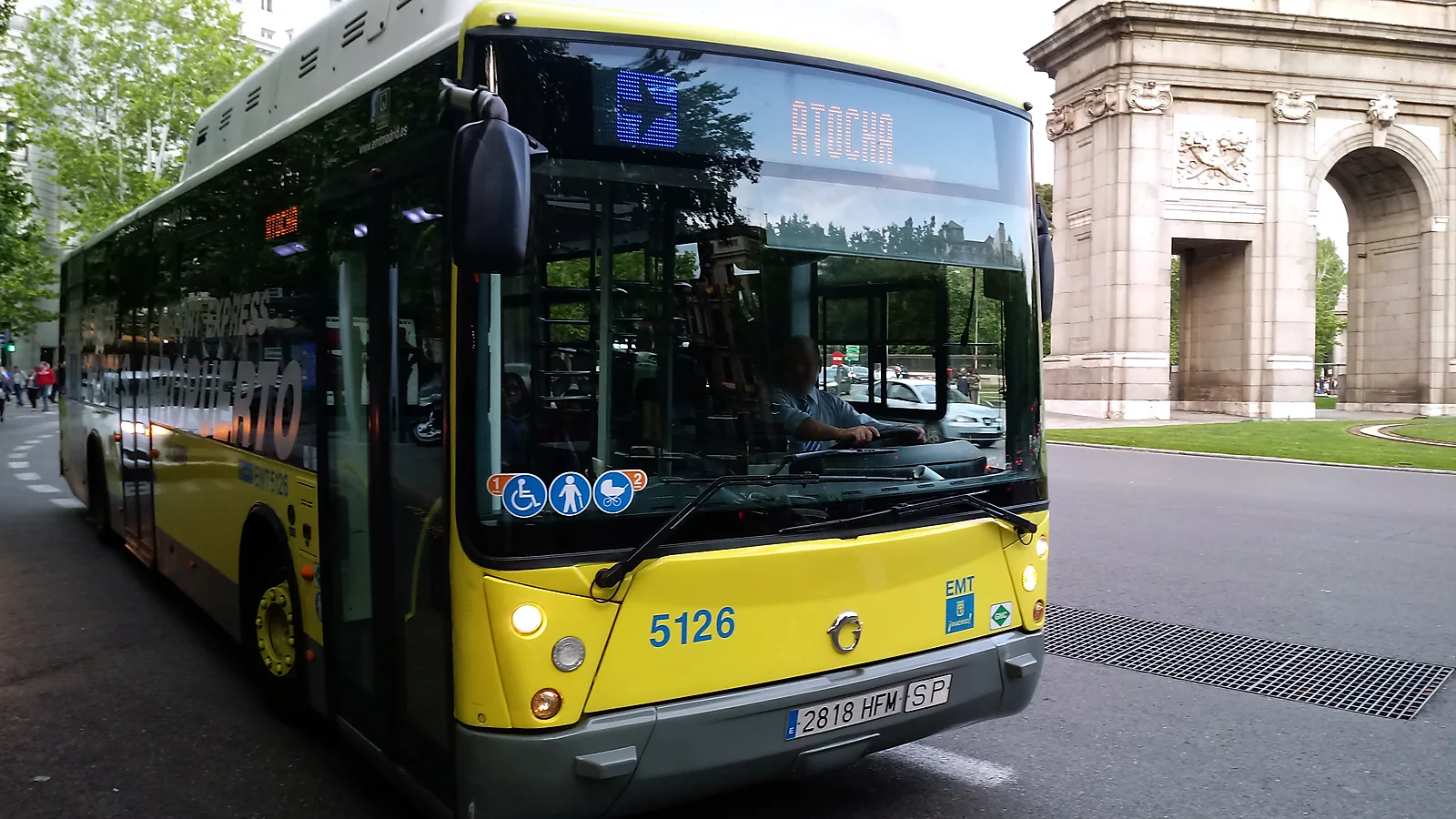
The Airport Express bus (line 203, the yellow one)
Bus
- Fare: €5 flat, paid on board — cash (the driver carries change up to €20), card or phone, with no surcharge either way. Also sold from machines at Atocha and at T1, T2 and T4.
- Daytime route: Atocha ↔ Cibeles ↔ airport, departing Atocha between 06:00 and 23:30.
- Overnight route: Cibeles ↔ airport only, from 00:00 to 05:40. It does not reach Atocha at night.
- Frequency: every 15–20 minutes by day, every 35 minutes at night. It runs from the airport 24 hours a day.
- Journey time from Atocha: about 30 minutes to T1, 35 to T2, 40 to T4.
- It serves T1, T2 and T4 — not T3.
This is the one to take if you land at 03:00 and your accommodation is near Cibeles or Atocha, or if you would simply rather not drag a suitcase through a Metro interchange. EMT’s airport page has the live route and stops.
Two cheaper buses nobody mentions
Bus
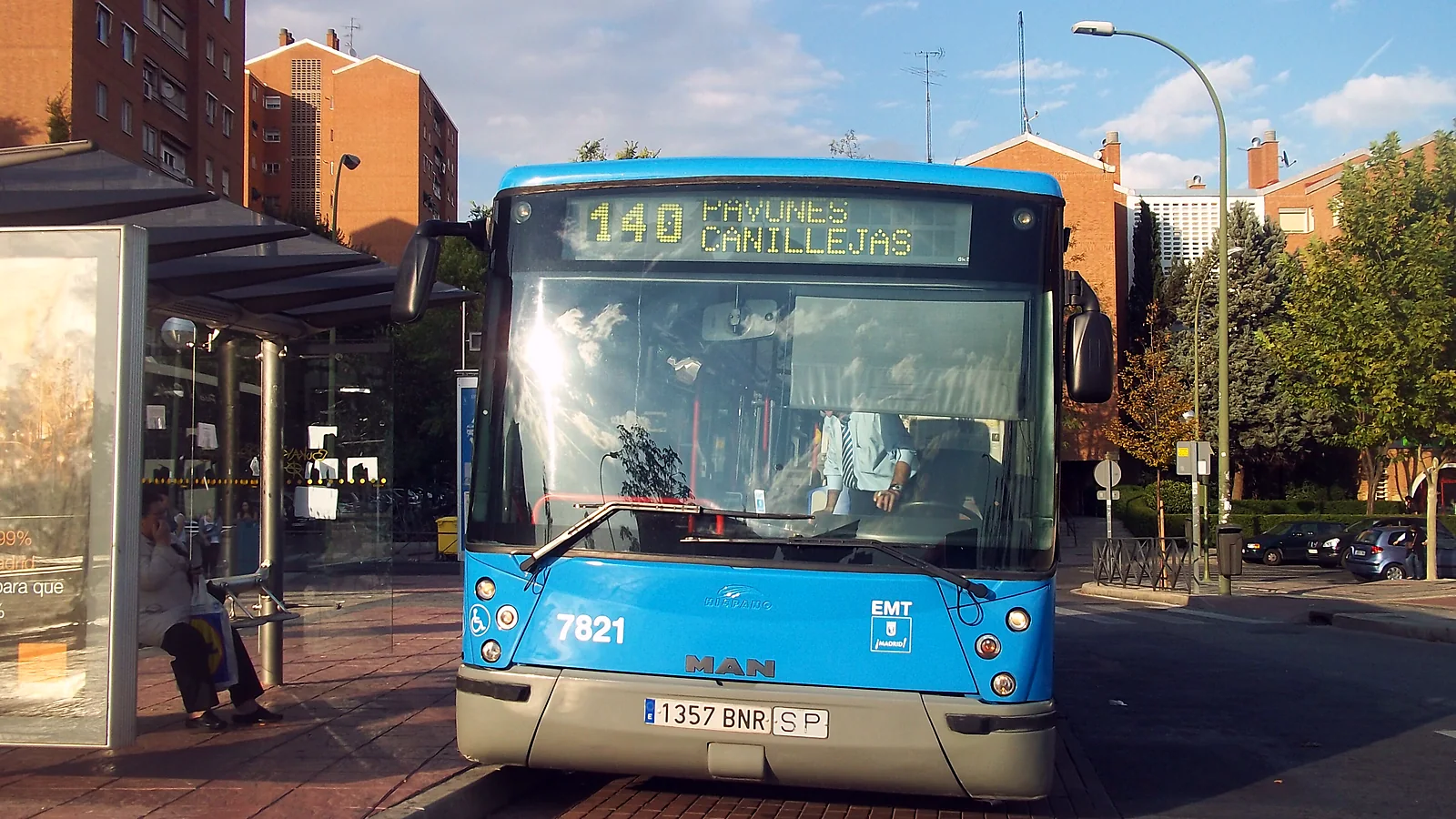
- Line 200, Avenida de América ↔ airport, €1.50 on an ordinary city fare, serving all four terminals.
- Line N32, a night bus introduced in February 2026, Avenida de América ↔ airport, all four terminals. Ordinary city fare. From the airport between 00:10 and 05:25; every 35 minutes Sunday to Thursday, every 17–18 minutes on Friday and Saturday nights. If you land in the small hours and the Express does not go your way, this is the cheap option.
Madrid airport taxi: the flat fare
Taxi
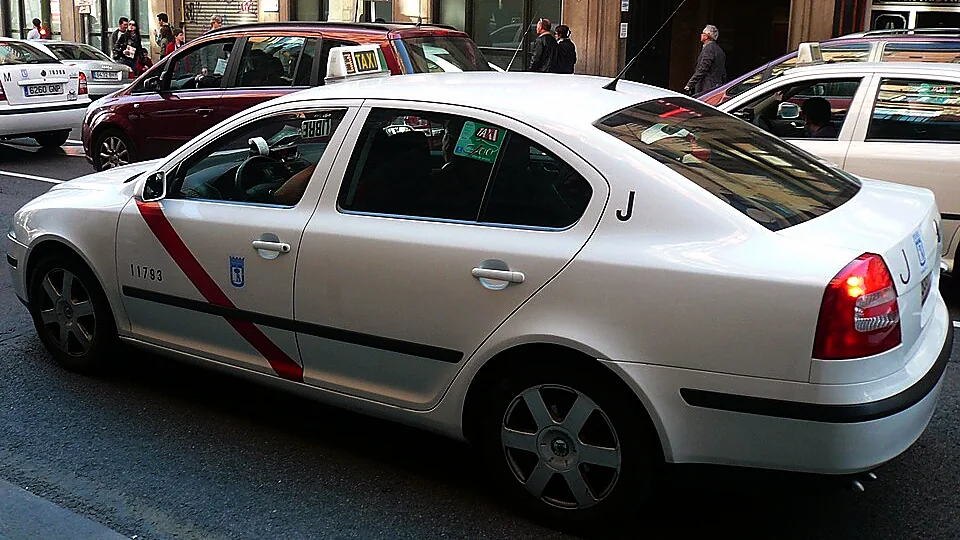
- €33 flat between the airport and anywhere inside the M-30 ring road, in both directions, 24 hours a day, every day of the year.
- That price is the whole price. The flat fare admits no surcharges at all — not for luggage, not at night, not on public holidays, not even the Christmas Eve and New Year’s Eve supplement.
- Beyond the M-30 the flat fare does not apply: the meter runs on Tariff 3, with a minimum charge of €22 for journeys under 9 kilometres from the terminals.
- Journey time: about 30 minutes, traffic depending.
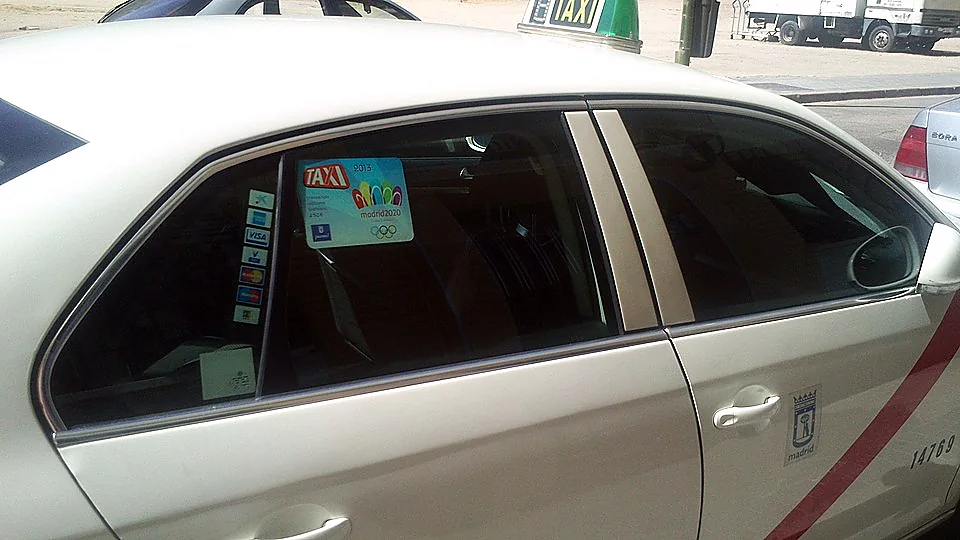
- Ranks are outside every terminal, around the clock. Full fare details are displayed on the rear side windows, and Aena lists the rank locations by terminal.
Fast, no stairs, no changes. With two or more people sharing, a taxi costs about the same as the Express bus and saves you the walk.
Uber, Cabify, Bolt and private transfers
All three apps operate at Barajas, with official pickup points published by Aena: car park P1 at T1, the express arrivals car park at T2, and car park P4, module D, level 4 at T4.
There is no regulated flat fare for ride-hailing. The €33 applies to licensed taxis only. Prices move with demand, and on a busy evening they usually land above the taxi flat fare rather than below it. A private transfer booked in advance costs more again, but somebody meets you in arrivals with your name on a sign, which counts for something after eleven hours in the air.
Watch out
If someone approaches you in arrivals, walk past them
Madrid’s airport taxis are among the better-regulated in Europe: €33 flat, no surcharges, and a signed rank outside every terminal. Which is precisely why the people making money off arriving passengers have to catch you before you reach one.
Two kinds do it. Tironeros are licensed drivers touting outside the authorised zones — they wait near the exits, and the doorway by gate 12 in Terminal 4 is a known spot. Piratas have no licence at all. The pitch is the same either way: a friendly offer of a taxi, a transfer, a better price, made to you inside the building or on the pavement before the rank. Both are known at Atocha and Chamartín too, so this is not only an airport problem.
What it costs you is the flat fare. A price agreed by hand instead of by meter is a price with no ceiling — and no receipt to complain with afterwards.
Aena’s own advice is blunt: ignore any offer of a taxi made inside the terminals. Then:
- The official ranks are outside arrivals, level 0, at T1, T2 and T4. They are signposted.
- An official Madrid taxi is white, with a red stripe and the city’s coat of arms on the door. If it does not look like that, it is not one.
- Once you are in, check that the meter starts or that the driver confirms the €33 flat fare, and ask for a receipt.
- Booked an Uber, Bolt or Cabify? Your driver is waiting in a car park — P1 at T1, the express arrivals car park at T2, P4 module D level 4 at T4. Nobody legitimate is going to meet you in the arrivals hall to offer you a ride on the spot.
Join the queue. It moves faster than it looks, and it costs €33.
Practical tips
Travelling with family or in a group
- Book a larger vehicle in advance for a taxi or private transfer. A standard car seats four; four people with suitcases is a different problem.
- Step-free access is not uniform across the Metro. With a pushchair or heavy cases, the Cercanías from T4 or a taxi will cost you far less effort than a Metro interchange.
- After a long flight, going straight to the door is worth paying for. A fixed €33 removes every remaining decision from an already long day.
Travelling alone
- The Metro is the sensible default: cheap, frequent, and line 8 puts you on the network in under 20 minutes.
- Travel light if you are using public transport. Interchanges mean stairs.
- Arriving after 01:30, the Metro is shut and the Express bus stops at Cibeles rather than Atocha. If neither works for you, take the taxi — the fixed fare means nobody can improvise a price at three in the morning.
Frequently asked questions
How do I get from Madrid airport to Madrid city centre?
Metro line 8 is the default: €4.50–€5.00, and 14 minutes from T1-T2-T3 to Nuevos Ministerios, where you change for the rest of the city. A taxi is a flat €33 and takes about 30 minutes. The yellow Express bus is €5 and runs to Cibeles and Atocha.
How do I get from Madrid airport to the train station?
It depends which one. For Chamartín, take Cercanías C-1 from Terminal 4: €1.70, 15 minutes, every 15 minutes. For Atocha, do not take the airport train — it only runs there twice a day. Use the Metro, the Express bus, or a taxi.
Does Madrid airport have a train station?
Yes, in Terminal 4, level -1. It is served by Cercanías line C-1 and by Metro line 8. If you land at T1, T2 or T3, take the free shuttle bus to T4 first.
How much is a taxi from Madrid airport to the city centre?
A flat €33 to anywhere inside the M-30, in either direction, at any hour, with no surcharges of any kind. Beyond the M-30 the meter runs instead, with a €22 minimum.
How do I get from Terminal 4 to T4S — or from T1 to T4?
T4 to T4S is a free automatic train inside the building, about five minutes, from level -1. T1, T2 or T3 to T4 is a free shuttle bus, every 5 minutes during the day: 10 minutes from T1, 8 from T2. You cannot walk it.
How do I get into Madrid at night?
After 01:30 the Metro is shut. The Express bus runs all night but only as far as Cibeles, not Atocha. Night bus N32 serves all four terminals on an ordinary fare. Otherwise, a taxi at the flat €33.
Is it safe to take a taxi at Madrid airport?
Yes, from the official rank. Madrid’s airport taxis are regulated and run on a €33 flat fare with no surcharges. What you should ignore is anyone offering you a ride inside the terminal or before you reach the rank — that is Aena’s own advice. Official taxis are white, with a red stripe and the city’s coat of arms on the door.
How early should I get to Madrid airport for my flight?
Aena’s own guidance applies rather than ours — but build in the transfer. From the centre, allow 45 minutes door to gate area by Metro, and remember that T4S sits a further five-minute train ride beyond T4.
So which one?
There is rarely one right answer, but there is usually an obvious one.
- Centre, daytime, light luggage → Metro, around €5.
- Chamartín, or a train out of it → Cercanías, €1.70.
- Atocha → Metro or taxi. Not the airport train.
- Two or more people, or heavy bags → taxi, €33 flat, split between you.
- The middle of the night → Express bus to Cibeles, night bus N32, or a taxi.
Whichever you pick, you will be in the centre inside 45 minutes. Madrid is closer to its airport than most capitals — one of the things this city quietly gets right.
Photos: Aeropuerto T4 and Príncipe Pío Cercanías by Draceane, CC BY-SA 4.0; Madrid taxi by Stanislav Kozlovskiy and Donperfectodewiki, CC BY-SA 3.0; EMT bus by WikimediaNameXD, CC BY 3.0; Airport Express bus by Snooze123, CC0 — all via Wikimedia Commons.