Secure payment with Stripe
I reply within minutes
★ 5.0 on Google
3 h · 10:00 & 15:00
8 riders · no more
Easy · near flat
English · always
Pick a date, a departure time and how many riders. Your total shows right below.
On foot, linking these ten is a full day — on a bike, three hours and one route. The streets between are mine: corners where one barrio stops pretending to be the next, small things that show up only when you slow down. That, more than the ten stops, is what makes this one of the unique things to do in Madrid. If you came here to plan an off the beaten path Madrid tour rather than tick off the Madrid things to see, this is the one.
Where Madrid rose against Napoleon in 1808 — pedestrian now, the archway still standing.
Site of the old Monteleón Artillery Park, where in 1808 Daoíz and Velarde led Madrid against Napoleon. Their statue still stands in the middle, framed by the original archway. The Plaza del 2 de Mayo Madrid is fully pedestrian now.
A 2,200-year-old Egyptian temple, given to Spain and rebuilt here stone by stone.
The oldest building you can walk into in Madrid — 2,200 years old. Built in Lower Nubia, expanded by Augustus and Tiberius. Egypt gave the Temple of Debod to Spain in 1968, thanks for helping save Abu Simbel from the Aswan dam. Reassembled here in 1972, same east-west orientation. The sunset behind it is the cliché every guidebook oversells and somehow still delivers.
The Royal Palace of Madrid: 3,418 rooms, twice the footprint of Versailles, and nobody lives in it.
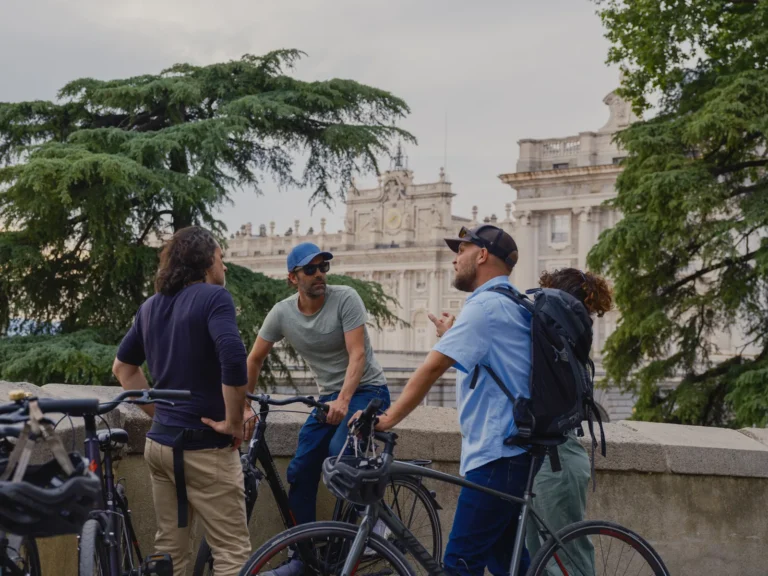
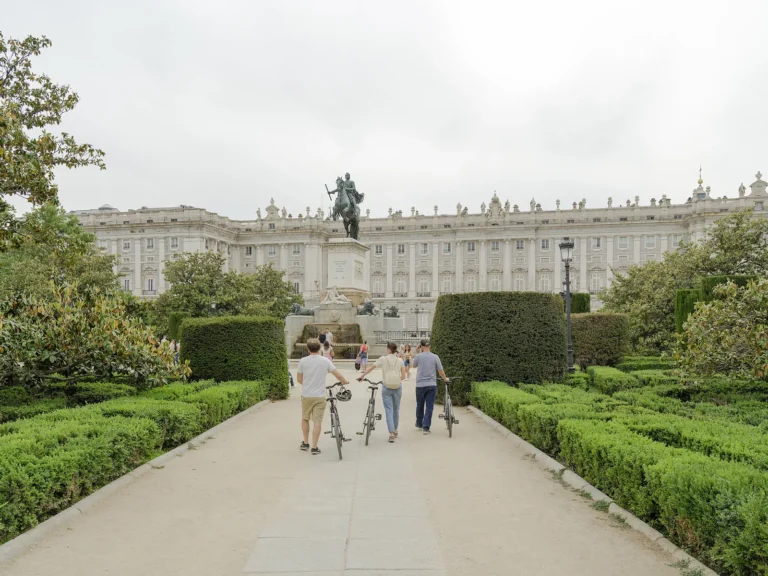
The Royal Palace Madrid is the largest royal palace in Western Europe — twice the footprint of Versailles, 3,418 rooms, built by Felipe V after the medieval Alcázar burned on Christmas Eve 1734. Nobody lives here. The plaza out front holds the bronze of Felipe IV on his horse — sculpted by Pietro Tacca with help from Galileo and a face sketched by Velázquez.
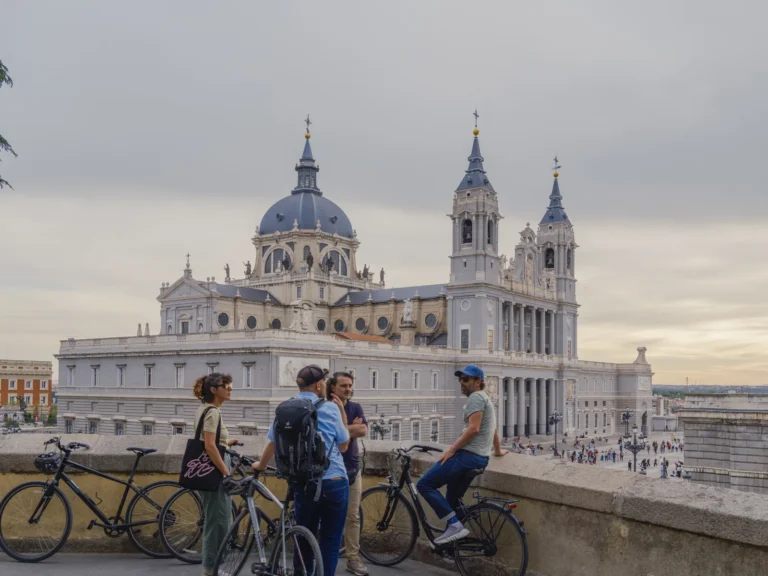
A street one floor above the rest: the Almudena Cathedral head-on, the palace from the side, free.
Calle del Factor runs parallel to Bailén, one floor above — which turns a normal street into a viewpoint. From the stone wall: a clean frontal of the Almudena Cathedral Madrid and a side of the Royal Palace, free, open 24 hours. The sun sets right behind both buildings. The street follows the old Arab and Christian wall.
Three buildings, three centuries, three styles — and the oldest civic building in Madrid.
Three buildings, three centuries, three styles. The 15th-century Casa y Torre de los Lujanes is the oldest civic building in Madrid — Mudéjar, with horseshoe arches and a legend about King Francis I of France held there after Pavía in 1525. The 16th-century Casa de Cisneros is Plateresque. The Casa de la Villa was the seat of the Madrid town hall until 2007. The Plaza de la Villa Madrid was this city’s political centre before Cibeles.
Inaugurated in 1619, burned down three times, with a statue that turned out to be full of bones.
Plaza Mayor Madrid was inaugurated in 1619 and burned down three times — 1593, 1672, 1790 — before Villanueva rebuilt it. The statue of Felipe III in the middle was pulled down during the Second Republic, broke open, and turned out to be full of bones: pigeons that flew into the horse’s open mouth over centuries and couldn’t get out.
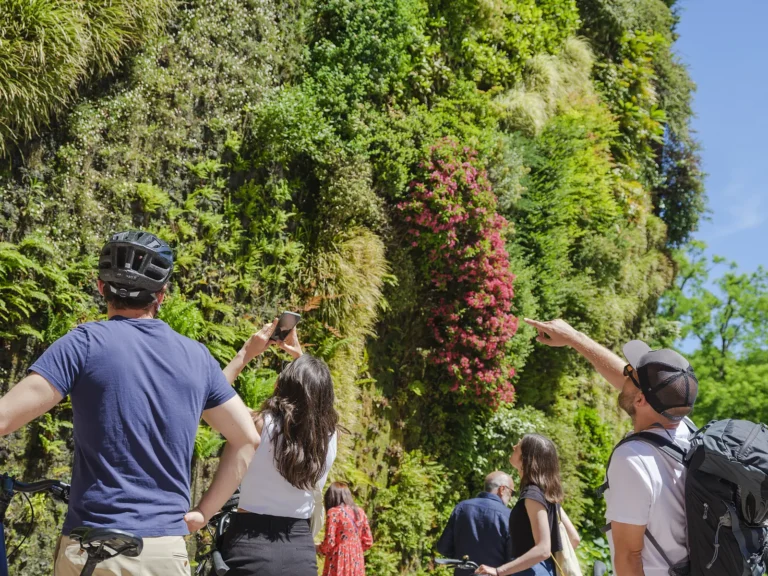
Barrio de las Letras: Cervantes and Quevedo underfoot, in gold letters along Calle Huertas.
Barrio de las Letras Madrid is named after Cervantes, Lope de Vega, Quevedo and Góngora — who lived, wrote and feuded in these streets in the 16th and 17th centuries. Their verses are set in gold lettering on the pavement of Calle Huertas. Today: bookshops, antiques, jazz and flamenco. The block ends at CaixaForum — an 1899 power station Herzog & de Meuron rebuilt to look like it floats, with Patrick Blanc’s 24-metre vertical garden, 15,000 plants, no soil.
The gothic church where Spanish heirs were sworn in, on the hill behind the Prado.
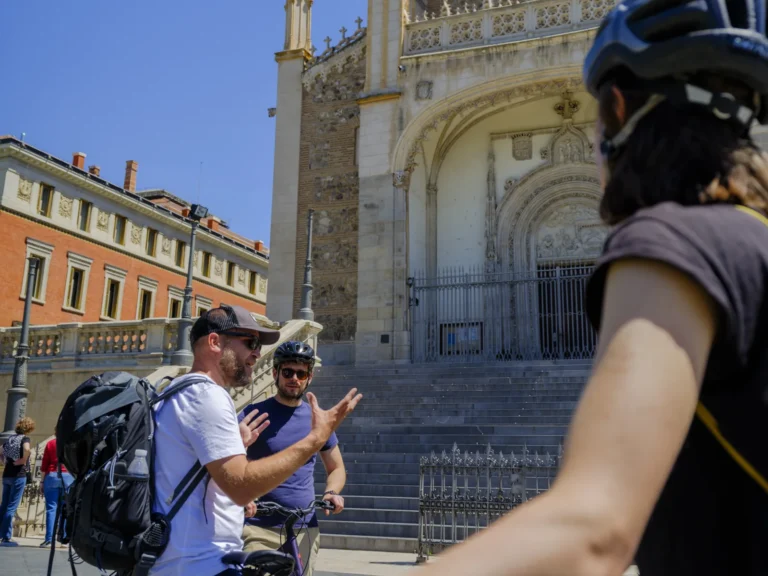
Behind the Prado, on the hill, sits the gothic church of San Jerónimo el Real — built in the 16th century for the Catholic Monarchs and the place where Spanish heirs to the throne were sworn in. The Prado itself, designed by Juan de Villanueva, was supposed to be a natural history cabinet. It opened in 1819 as a painting museum instead. The block around it — Los Jerónimos Madrid — is what’s left of a much larger 17th-century royal palace.
Sabatini built two designs into one gate, because Carlos III approved both by mistake.
The Puerta de Alcalá was built in 1778 by Francesco Sabatini, who showed Carlos III several sketches and watched the king accidentally approve two of them — so he built both, with a military east face and a polished west face. The granite still carries bullet marks from 1808 and 1823. Behind it the Retiro: 125 hectares of royal-only pleasure ground turned public park. The lake was dug for staged naval battles; tucked among the trees, the Ángel Caído — one of the few public monuments to Lucifer anywhere, at exactly 666 metres above sea level.
The seam between the old city and the Paseo del Prado, ringed by four palaces.
Plaza de Cibeles Madrid is the seam between the old city and the Paseo del Prado, ringed by four palaces from the 18th to the 20th century. The fountain — Ventura Rodríguez, 1782 — shows the goddess pulled by two lions Aphrodite condemned to tow her chariot for eternity. Thirty-five metres below sits the gold vault of the Bank of Spain; if you try to break in, the alarm floods the chamber with water from the fountain above.
On foot, linking these ten is a full day — on a bike, three hours and one route. The streets between are mine. If you came here to plan an off the beaten path Madrid tour rather than tick off the Madrid things to see, this is the one — one of those Madrid, Spain things to do that no guidebook lists.
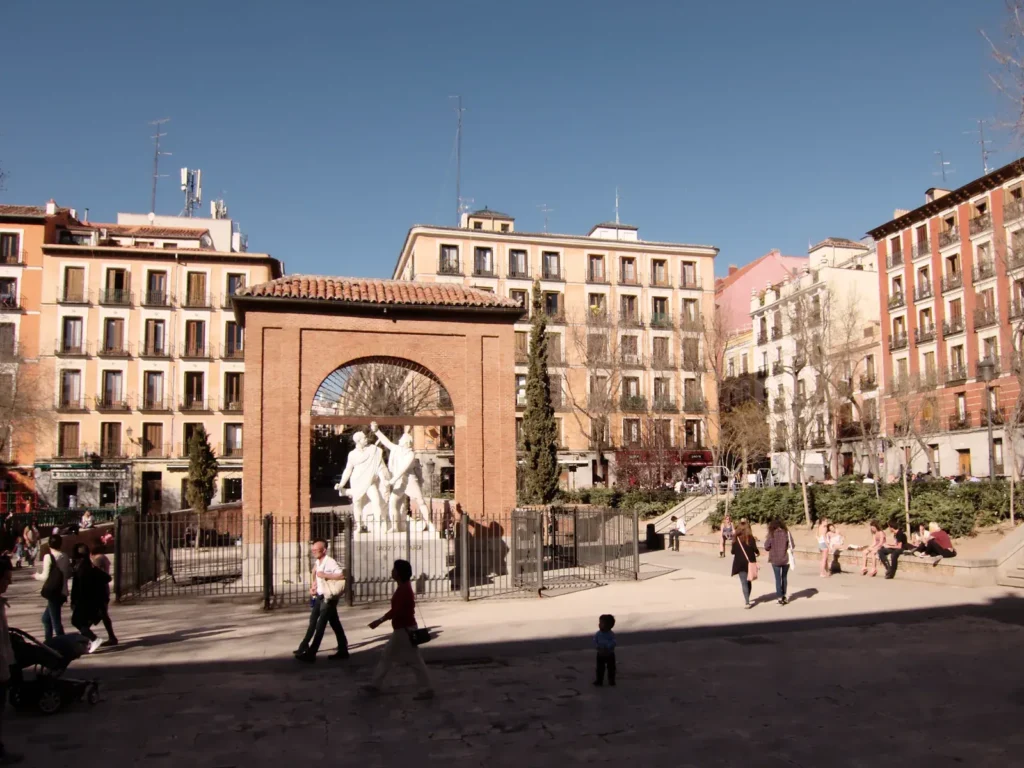
Site of the old Monteleón Artillery Park, where in 1808 Daoíz and Velarde led Madrid against Napoleon. Their statue still stands in the middle, framed by the original archway. The Plaza del 2 de Mayo Madrid is fully pedestrian now.
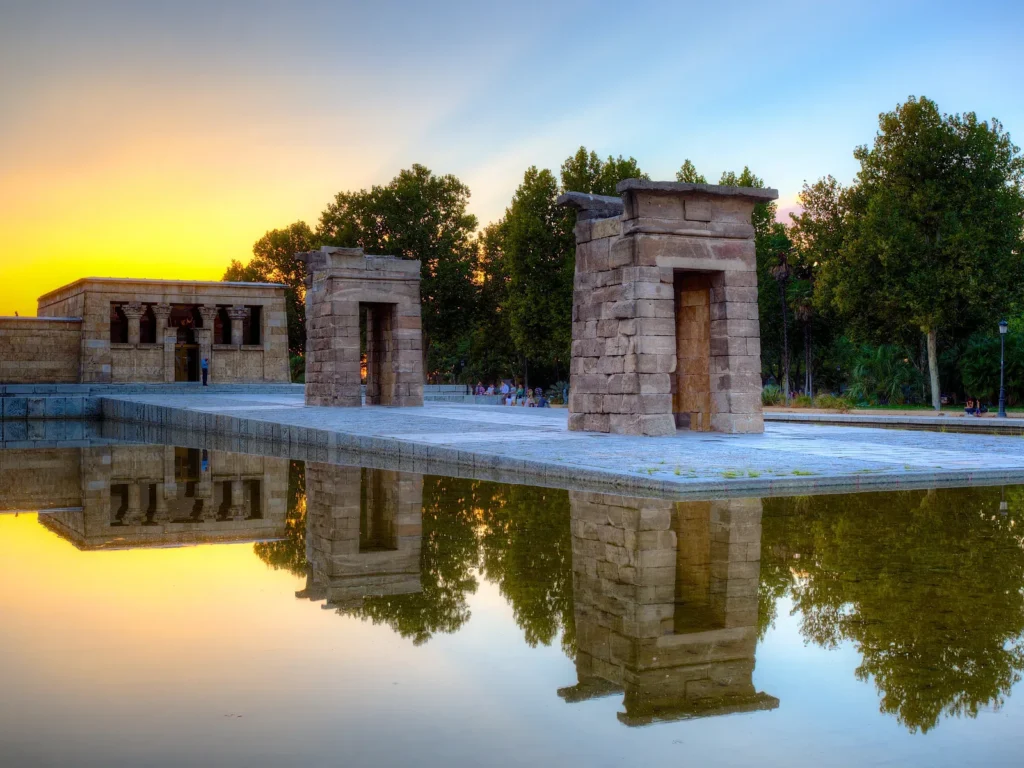
The oldest building you can walk into in Madrid — 2,200 years old. Built in Lower Nubia, expanded by Augustus and Tiberius. Egypt gave the Temple of Debod to Spain in 1968, thanks for helping save Abu Simbel from the Aswan dam. Reassembled here in 1972, same east-west orientation. The sunset behind it is the cliché every guidebook oversells and somehow still delivers.
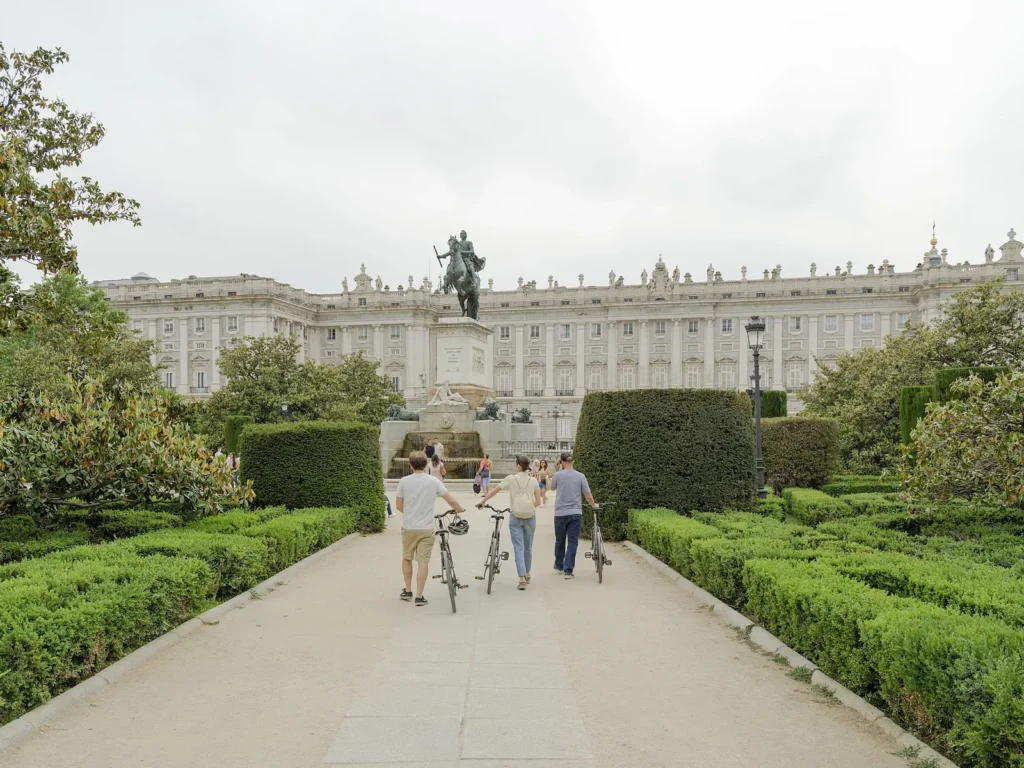
The Royal Palace Madrid is the largest royal palace in Western Europe — twice the footprint of Versailles, 3,418 rooms, built by Felipe V after the medieval Alcázar burned on Christmas Eve 1734. Nobody lives here. The plaza out front holds the bronze of Felipe IV on his horse — sculpted by Pietro Tacca with help from Galileo and a face sketched by Velázquez.
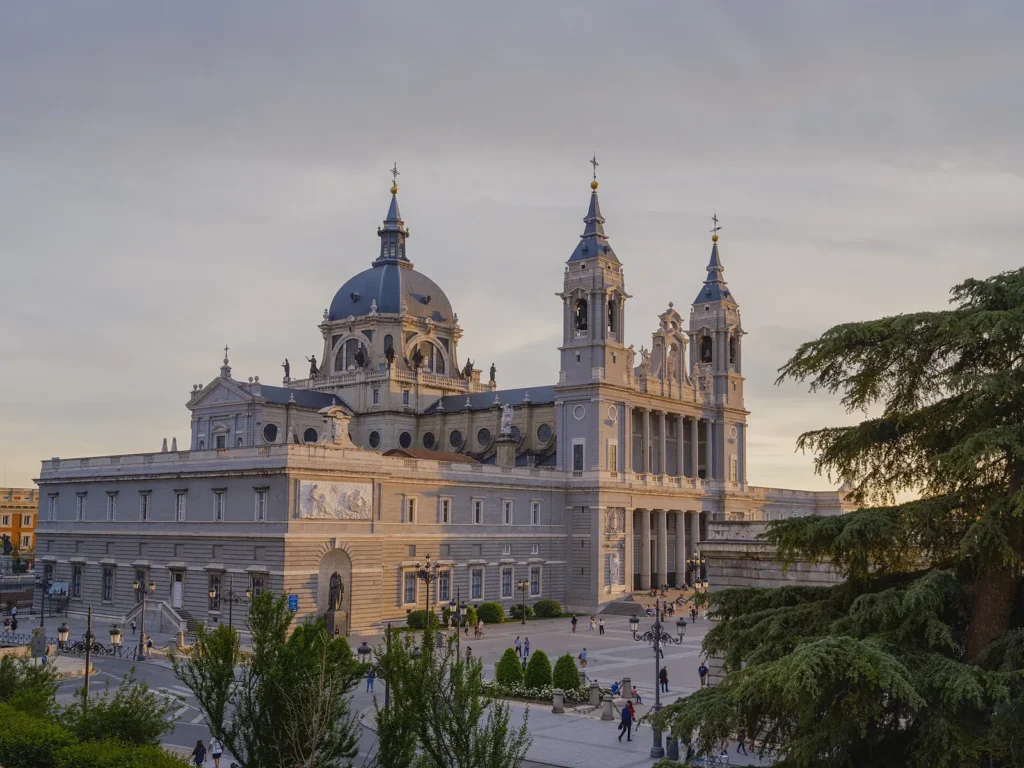
Calle del Factor runs parallel to Bailén, one floor above — which turns a normal street into a viewpoint. From the stone wall: a clean frontal of the Almudena Cathedral Madrid and a side of the Royal Palace, free, open 24 hours. The sun sets right behind both buildings. The street follows the old Arab and Christian wall.
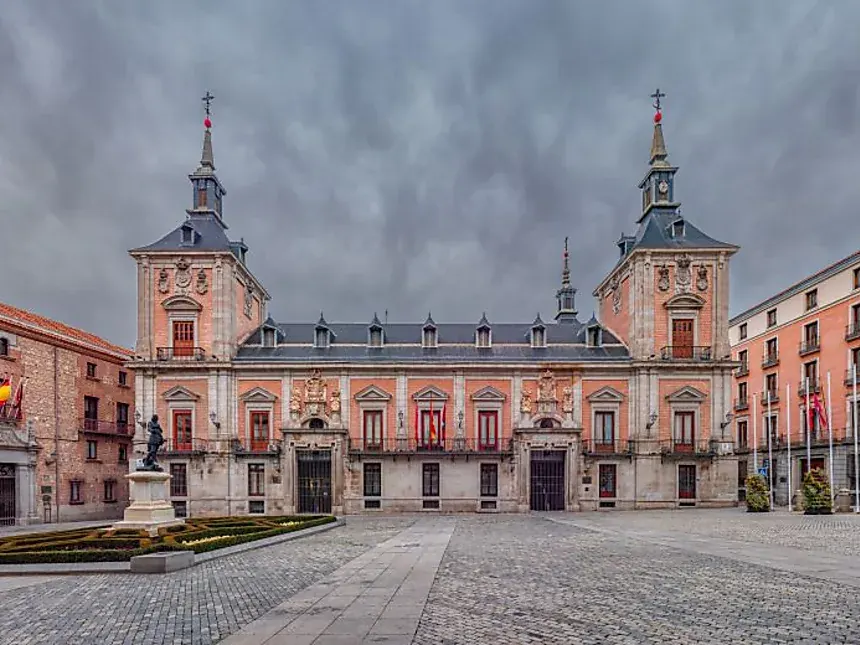
Three buildings, three centuries, three styles. The 15th-century Casa y Torre de los Lujanes is the oldest civic building in Madrid — Mudéjar, with horseshoe arches and a legend about King Francis I of France held there after Pavía in 1525. The 16th-century Casa de Cisneros is Plateresque. The Casa de la Villa was the seat of the Madrid town hall until 2007. The Plaza de la Villa Madrid was this city’s political centre before Cibeles.
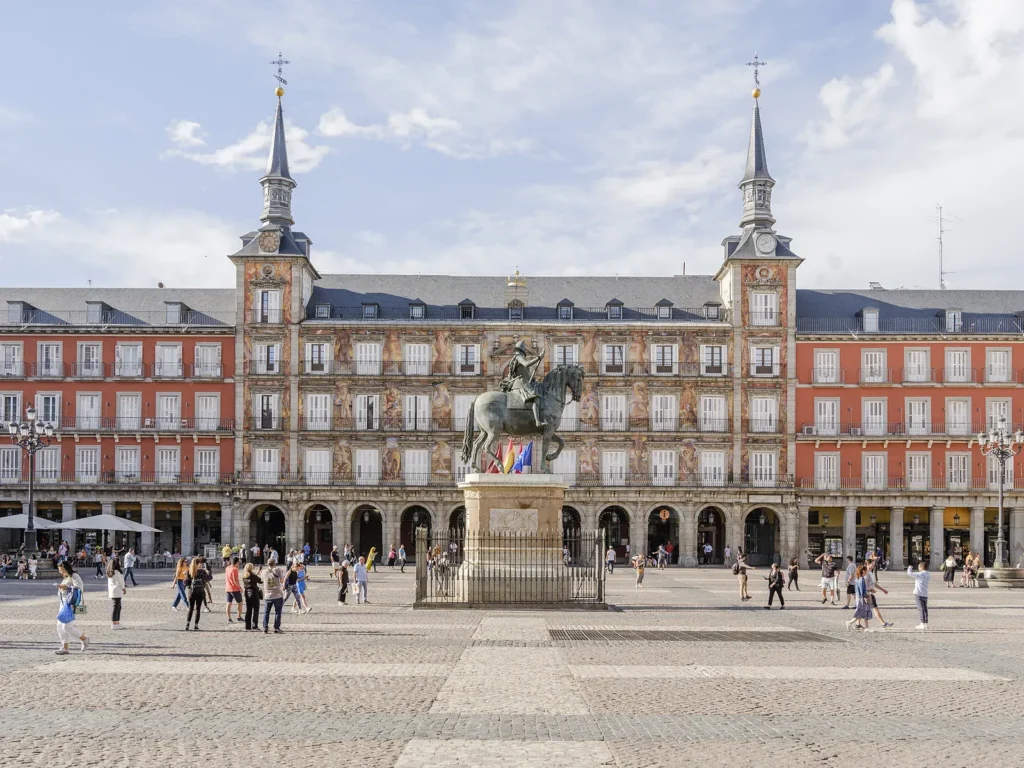
Plaza Mayor Madrid was inaugurated in 1619 and burned down three times — 1593, 1672, 1790 — before Villanueva rebuilt it. The statue of Felipe III in the middle was pulled down during the Second Republic, broke open, and turned out to be full of bones: pigeons that flew into the horse’s open mouth over centuries and couldn’t get out.
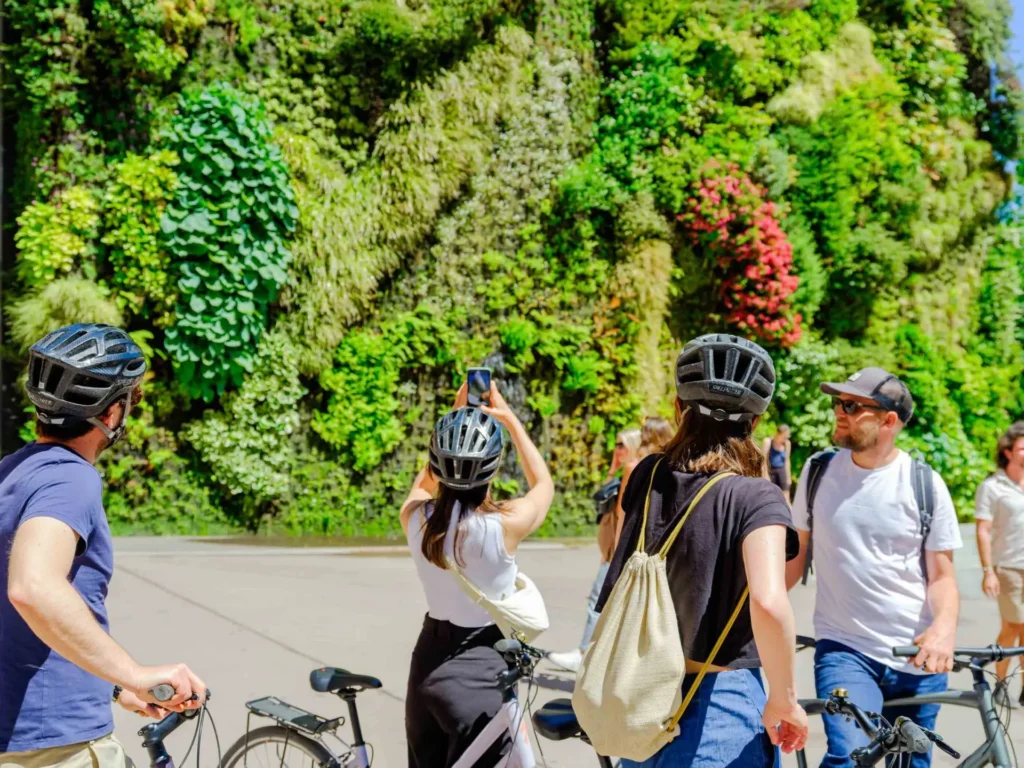
Barrio de las Letras Madrid is named after Cervantes, Lope de Vega, Quevedo and Góngora — who lived, wrote and feuded in these streets in the 16th and 17th centuries. Their verses are set in gold lettering on the pavement of Calle Huertas. Today: bookshops, antiques, jazz and flamenco. The block ends at CaixaForum — an 1899 power station Herzog & de Meuron rebuilt to look like it floats, with Patrick Blanc’s 24-metre vertical garden, 15,000 plants, no soil.
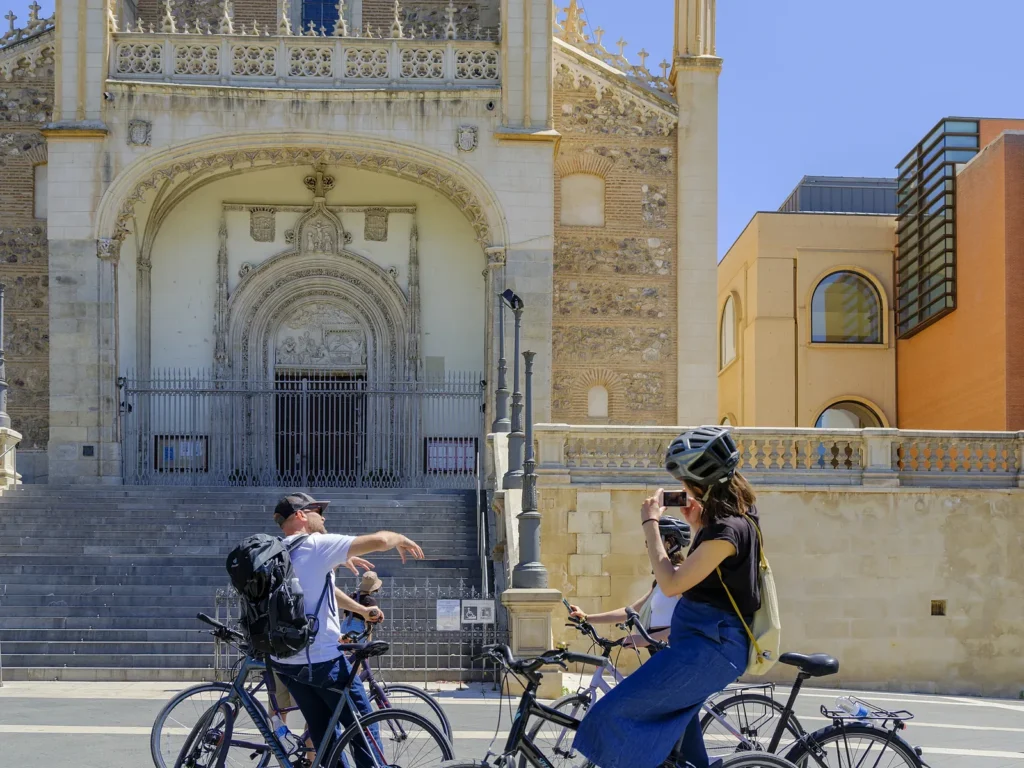
Behind the Prado, on the hill, sits the gothic church of San Jerónimo el Real — built in the 16th century for the Catholic Monarchs and the place where Spanish heirs to the throne were sworn in. The Prado itself, designed by Juan de Villanueva, was supposed to be a natural history cabinet. It opened in 1819 as a painting museum instead. The block around it — Los Jerónimos Madrid — is what’s left of a much larger 17th-century royal palace.
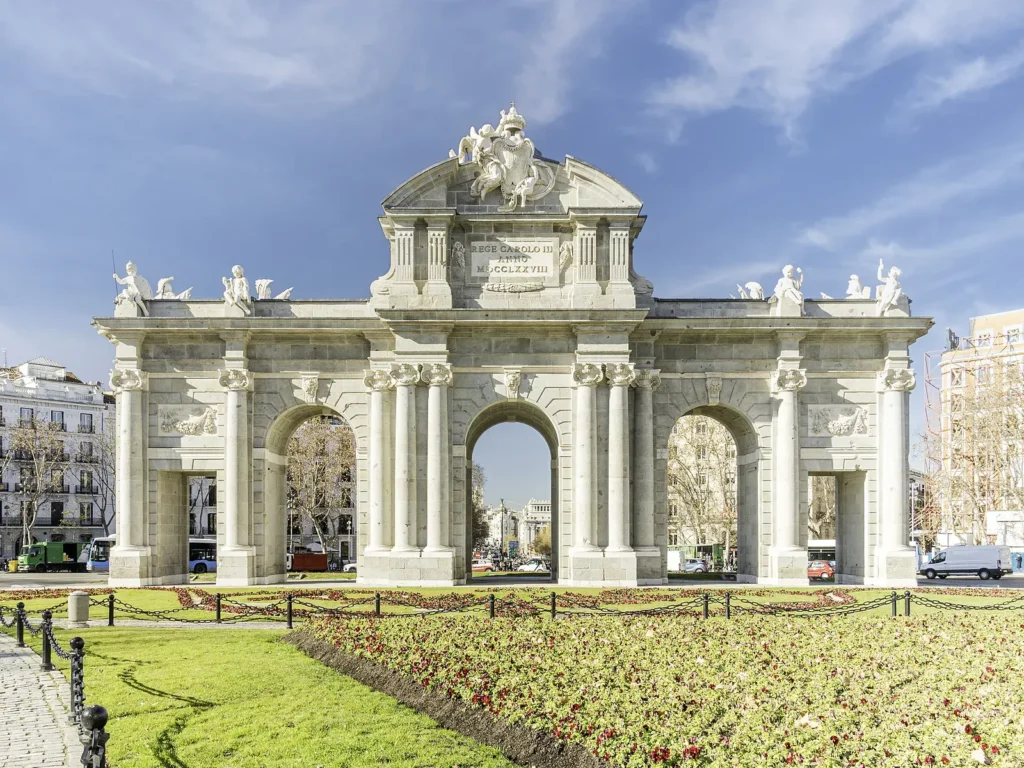
The Puerta de Alcalá was built in 1778 by Francesco Sabatini, who showed Carlos III several sketches and watched the king accidentally approve two of them — so he built both, with a military east face and a polished west face. The granite still carries bullet marks from 1808 and 1823. Behind it the Retiro: 125 hectares of royal-only pleasure ground turned public park. The lake was dug for staged naval battles; tucked among the trees, the Ángel Caído — one of the few public monuments to Lucifer anywhere, at exactly 666 metres above sea level.
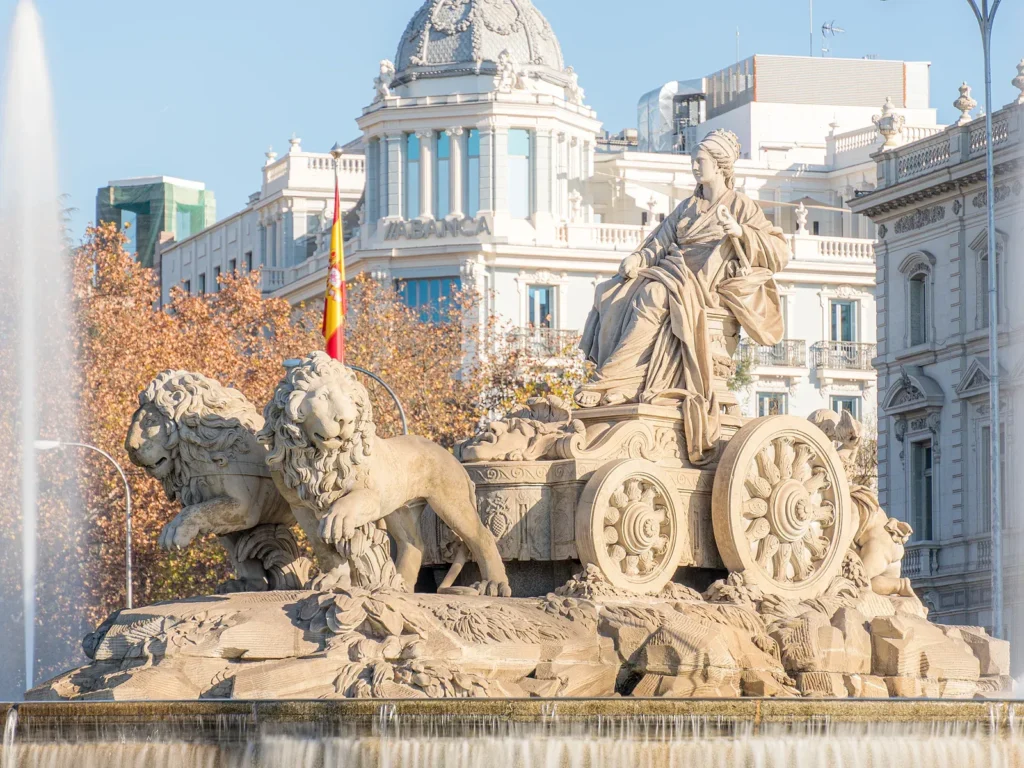
Plaza de Cibeles Madrid is the seam between the old city and the Paseo del Prado, ringed by four palaces from the 18th to the 20th century. The fountain — Ventura Rodríguez, 1782 — shows the goddess pulled by two lions Aphrodite condemned to tow her chariot for eternity. Thirty-five metres below sits the gold vault of the Bank of Spain; if you try to break in, the alarm floods the chamber with water from the fountain above.
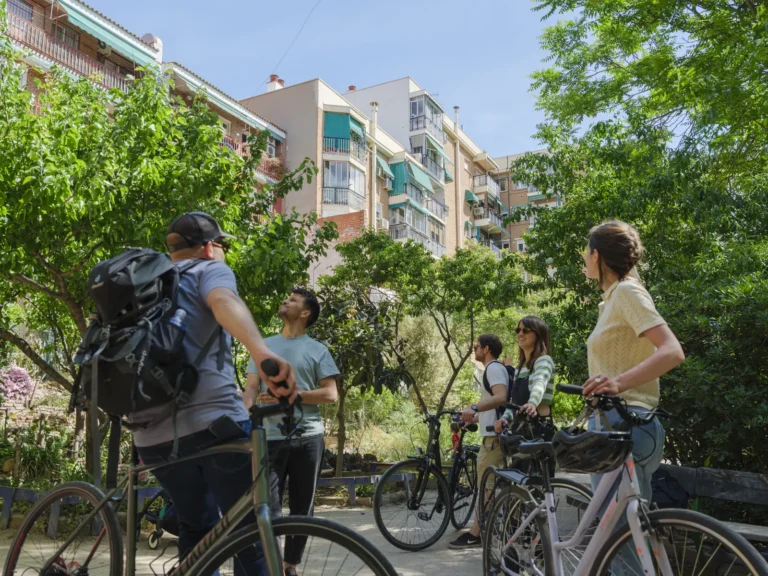
There are two kinds of guided Madrid bike tour: the one designed by someone reading a map and joining up the most photographed monuments, and the one that comes out of crossing the city end to end at first light for years. This is the second. Three hours, eight riders, a bike each — central Madrid from a side you won’t get on foot (too much ground) or by bus (wrong scale, wrong pace). The city is compact but deceptive: not flat. On foot you watch your phone and the climbs; the bus keeps you behind glass; the bike stops where you want and lets you look up.
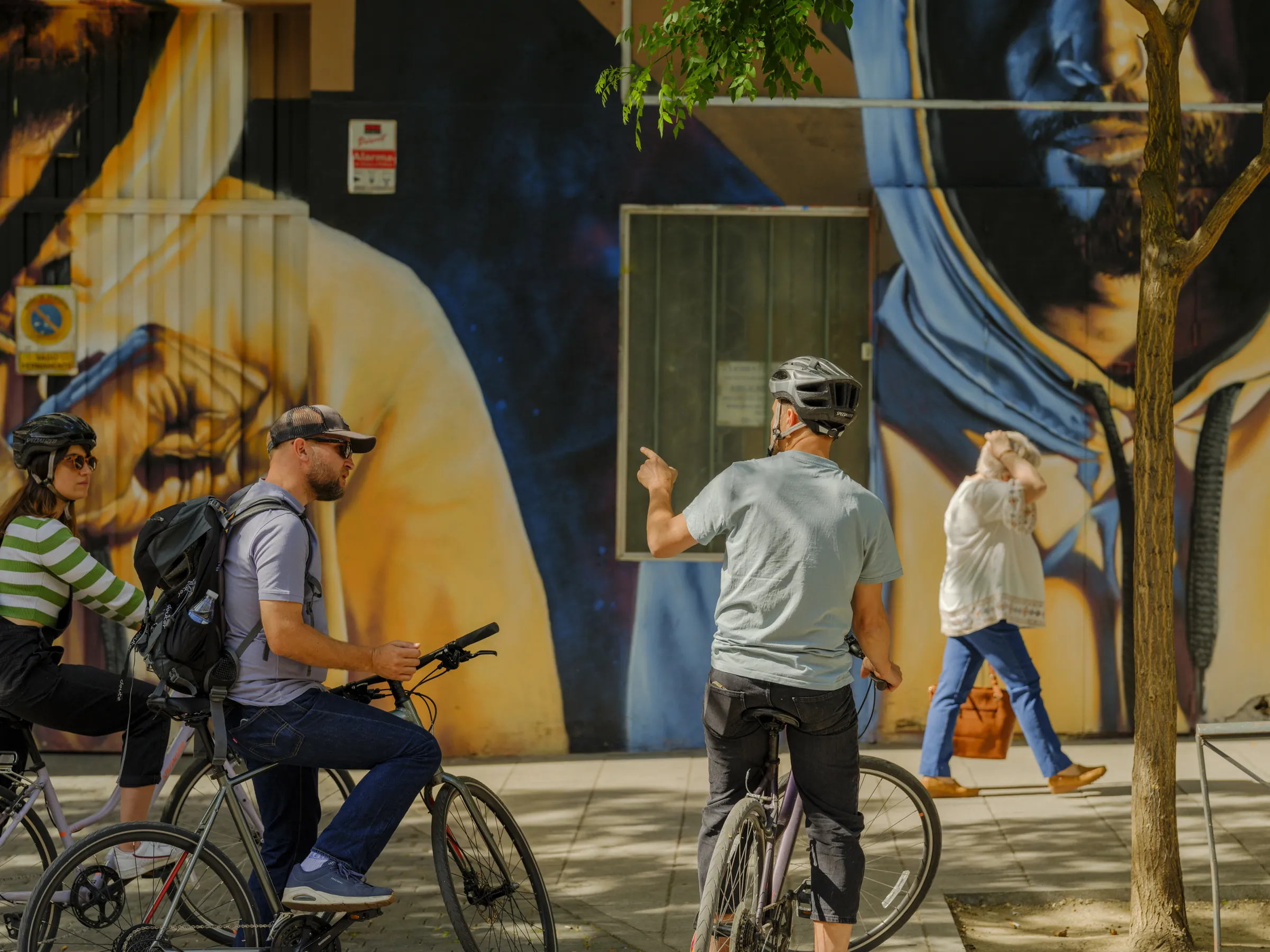
Before this route went on the website I rode it corner by corner. We stop, of course, but I don’t tell it in a straight line — I jump from past to present, from the Egyptian temple Madrid wouldn’t have without twentieth-century geopolitics to why the days here stretch so late. Eight riders, no exceptions, never folded in with another guide’s overflow. Your bike is fitted to you before we set off. I ride in front; you go at the pace that lets you look up — at the balcony you’d have walked past, the corner where the city changes neighbourhood without warning. Same route every time, same care every time. That’s how a Madrid bike tour stays honest after four hundred laps.
Here’s how it actually goes. If you’re after the unique things to do in Madrid — the hidden gems locals actually use, not the postcards — this is the way in: I meet you and fit your bike, I lead a small group through the route, and you leave with my map of where to eat, drink and walk. It’s one of the more unusual things to do in Madrid for young adults, and for anyone else who’d rather ride than queue.
I’ll be waiting at Calle de los Jardines 12. Bike fitted to your height, helmet, water bottle, quick safety brief.
A route I designed myself, through landmarks and the streets between them — paced so questions get answered before the next square.
Before we say goodbye, a verbal map of where to eat, drink and walk. Same map in writing in your inbox the same afternoon.
You bring shoes you can pedal in, sunglasses and sunscreen. I bring the bike, the helmet, complimentary water and liability insurance — and an e-bike if you’d rather (+€15).
I keep the kit light so you can travel light too.
€47 per person buys three hours of the hidden Madrid bike tour, eight riders maximum, and a route I designed and guide myself from start to finish — your own bike, helmet, water and insurance, all included. The price reflects the group size: you’re one of eight, not one of forty, and never folded into someone else’s tour. E-bike +€15 if you’d rather spin up the climbs.
If you can ride a bike on flat streets, you’re set. The hidden Madrid bike tour runs at an easy pace, mostly flat, mostly on bike lanes or quiet streets. No fitness level required, no special gear. If it’s been a while since you rode, you can warm up on the bike before we start.
City bikes, well-maintained, sized to you on the spot. Each tour includes the guide (me), the bike, the helmet (mandatory under 16, optional otherwise), a water bottle, and the safety brief. Electric bikes are available for €15 extra per person if you want less effort on the climbs.
Madrid is more bike-friendly than it was five years ago. The routes I designed avoid heavy traffic — we ride bike lanes, quiet streets, and the barrios where the traffic eases off. I lead the group, set the pace, and call out anything to watch for. And the helmet is there for everyone — mandatory under 16, optional otherwise. 8 riders max means I can keep an eye on everyone.
Open tours run in English. Private tours, you pick — English, French, or Spanish. I grew up between Madrid, Algiers, and Casablanca, so the three feel native.
Didn’t see your question?
Just message me. I reply within 24 h, usually sooner.


Yves