
Retiro Park Madrid, the Parque del Retiro, is much more than the city’s big park. Below I tell its story in order, from the beginning to today, with the buildings and monuments I usually point out on my Hidden Madrid Bike Tour.
It all started next to the monastery of the Jerónimos, where the kings had a place to retreat to. In 1630 Philip IV built a palace there, with gardens and ponds where the court held its festivities. Later it became a porcelain factory, then a barracks for Napoleon’s troops and, in part, Ferdinand VII’s private garden. In 1868, after the revolution that deposed Isabella II, it passed to the City Council and opened as a park for everyone in Madrid. Today it’s a World Heritage Site, together with the Paseo del Prado.
The origins: a refuge next to the Jerónimos (15th-16th centuries)
I start the story of Retiro at the church of the Jerónimos. It belonged to a monastery that Henry IV founded around 1464 on the banks of the Manzanares, near El Pardo. The place was so unhealthy that the monks were often ill, so they asked to move somewhere better. In 1502 the Catholic Monarchs gave them the spot where the church stands today, and the new church and monastery went up between 1502 and 1505.
Spain is a constitutional monarchy today, but for centuries the heirs to the throne were sworn in as Princes of Asturias in this very church. Ferdinand the Catholic held the Cortes here in 1510. And here, in 1528, his grandson Charles, the first king of an empire with territories all over the world, had his son, the future Philip II, sworn in as heir. The tradition lasted until Isabella II, in 1833.
Back then, Madrid barely reached the start of what is now Calle de Alcalá. Right there, in today’s Puerta del Sol square, stood the Sol gate, the eastern way out of the 15th-century town wall.
So when you stand in front of the church, picture the monastery in the middle of the countryside: meadows, orchards and poplar groves, just outside a town that ended at the Puerta del Sol.
What’s left of the monastery’s old cloister is now part of the Prado Museum. It’s inside the red-brick building right next to the church: Rafael Moneo’s extension, opened in 2007.
Before moving on to the garden, take a good look at the church. The original went up between 1502 and 1505, in late Gothic style with a few Renaissance touches. During the Peninsular War its Gothic doorway and altarpieces were destroyed, and in 1859 the outside was rebuilt in Neo-Gothic style. That’s where the towers and pinnacles come from. The grand staircase was added for the wedding of King Alfonso XIII in 1906.
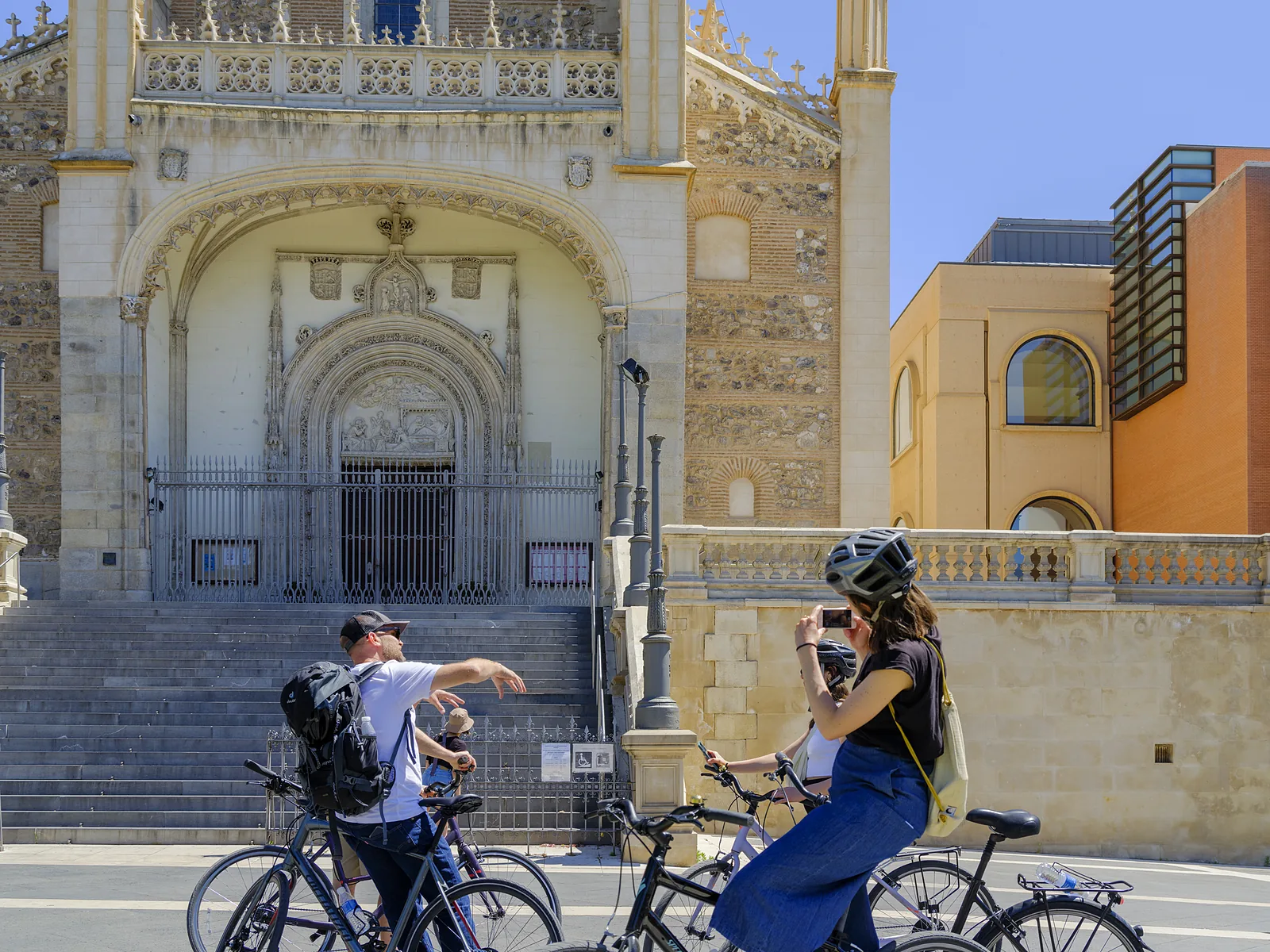
So how did Retiro begin? Jump forward about 60 years, to 1561, when Philip II moved the court from Toledo to Madrid and the town became the centre of the Spanish Empire. Philip II was a fervent Catholic, and that personal need is at the very root of Retiro. That same year he enlarged the Cuarto Real, the royal lodgings attached to the monastery, so he’d have a place outside the city for spiritual retreat, where nobody would disturb him.
That’s where the name comes from: it was where the king went to “retire”. Over time it became the Buen Retiro, the “good retreat”, and that’s why many people still call it Buen Retiro Park.
Under Philip IV, between 1630 and 1640, those same lodgings grew in stages until they became the Buen Retiro Palace.
Philip IV’s Buen Retiro (1630-1640)
One of the big problems of the Spanish Empire in the 17th century was that the people really running things were the king’s favourites, the validos. I like to explain it with a familiar example: they were the Hand of the King from Game of Thrones.
In 1629 the Count-Duke of Olivares, Philip IV’s valido, decided to turn those lodgings into a pleasure palace for the king. Work started in 1630, and in ten years more than 20 buildings went up around two large squares, surrounded by gardens and ponds.
If you visit the Prado, go into the Velázquez room and stop in front of Las Meninas. In that same room you’ll find two magnificent equestrian portraits, one of Philip IV and one of the Count-Duke of Olivares. The king’s, from 1635, was painted precisely for the Salón de Reinos of the Buen Retiro.
There was never an overall plan: the palace grew piece by piece. Giovanni Battista Crescenzi ran the works, and after his death in 1635 Alonso Carbonel took over.
Italian stage designers such as Cosimo Lotti worked in the gardens, and they also put together the court’s festivities.
From those years the Estanque Grande, the Great Pond (1634-1638), designed by Cristóbal de Aguilera, is still there. It was a water reservoir, a place for boating and a stage for naval battles.
What remains of the palace
Only a couple of buildings are left from the old palace. They stand outside the park railings, between the park and the Prado Museum, and both belong to the Prado today:
- The Salón de Reinos (Hall of Realms). For more than a century and a half it was a military museum, until the Army Museum moved to Toledo in 2010. In 2015 it passed to the Prado, and in 2016 Norman Foster and Carlos Rubio won the competition to restore it. It’s being restored right now to become a new Prado exhibition space, and it’s due to open to the public at the end of 2028.
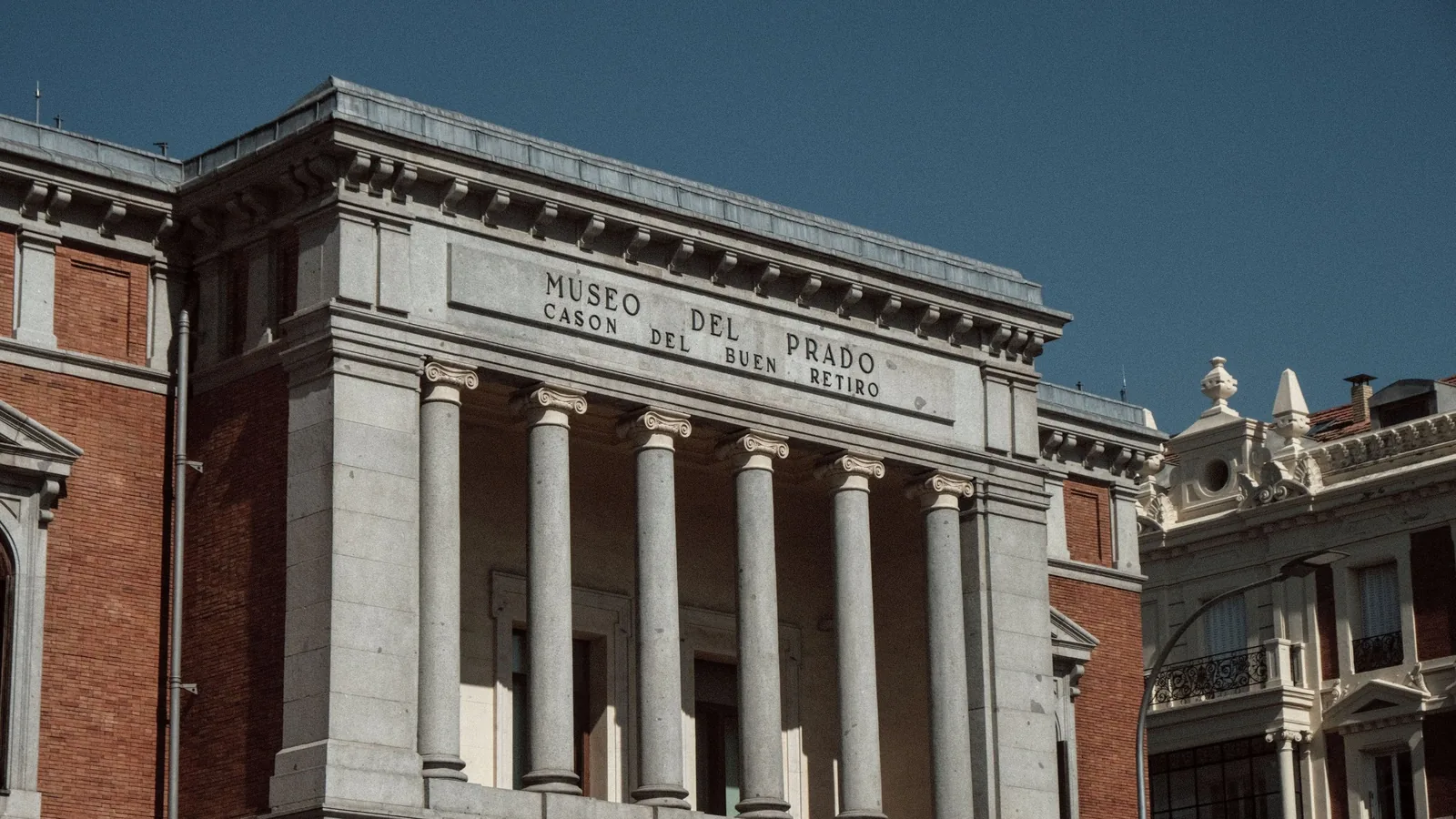
- The Casón del Buen Retiro, the former ballroom. Today it houses the Prado’s library and study centre, and it still has its ceiling painted by Luca Giordano. It stands right opposite the Puerta de Felipe IV, and I suggest looking at it from the end of the Parterre, the French-style garden Philip V had made.
Inside Retiro Park Madrid
Now that you’re inside, keep in mind that the garden you’re about to discover is completely different from the original, both in layout and in size. To give you an idea, Retiro has the same spirit as Central Park in New York: both are man-made parks. The difference is that Retiro is almost 400 years old.
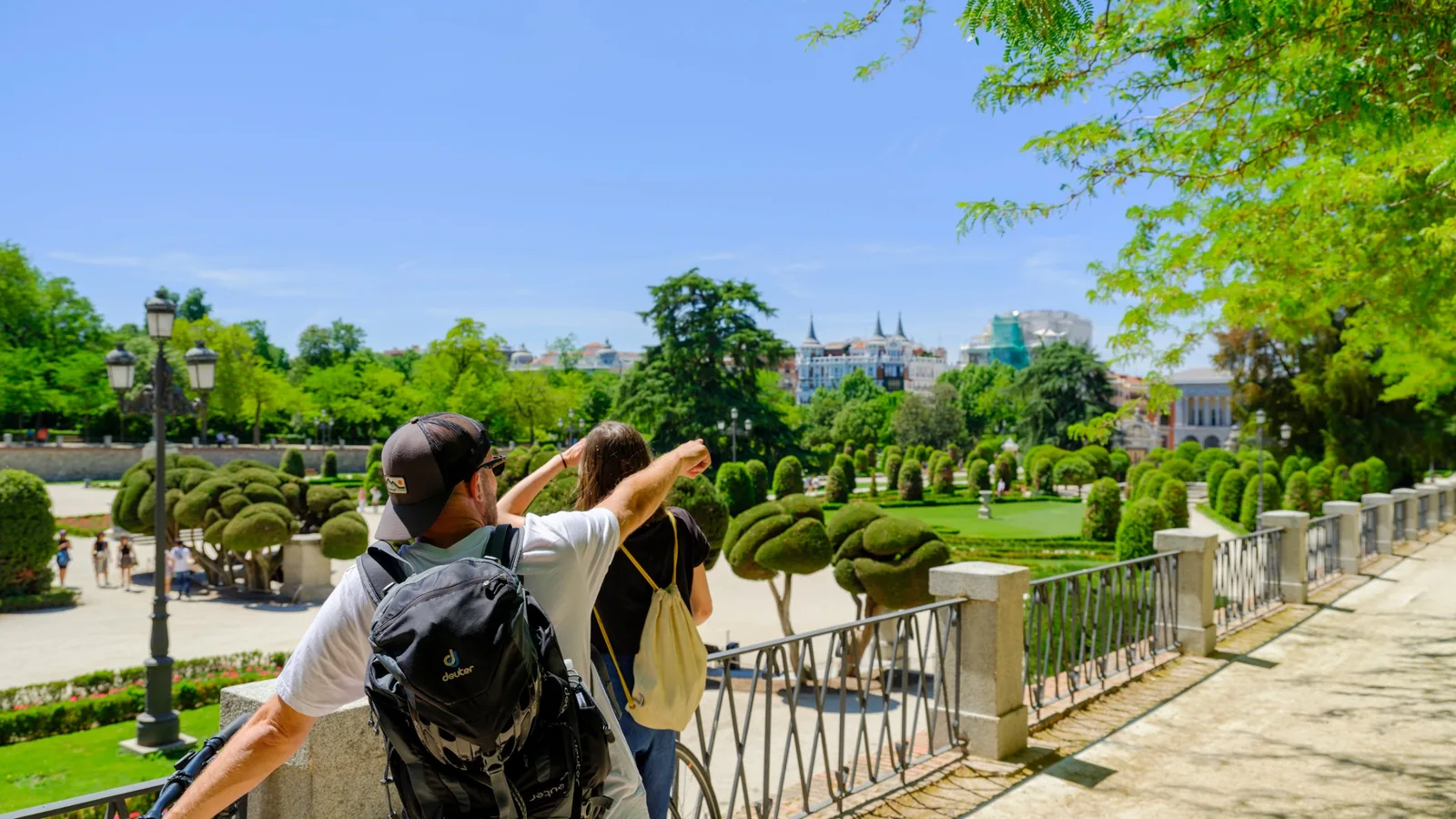
Retiro’s original grounds stretched all the way to what is now the Paseo del Prado. In other words, the land where the Prado Museum, the Botanical Garden and City Hall stand today was once part of Retiro.
In 1865, faced with a large public treasury deficit, Isabella II authorised the sale of part of Retiro: the strip facing the Paseo del Prado. It coincided with the Castro Plan of 1860 and the planning of Madrid’s new districts. Some 2,000 trees were cut down to open Calle de Granada, now Calle de Alfonso XII. That’s how the Jerónimos neighbourhood was born: the land was split into plots, and Spain’s great fortunes built their mansions there. I call it a Spanish Downton Abbey in the heart of Madrid.
The war lays it waste (1808-1814)
The other event that shaped today’s garden was the Peninsular War. Napoleon’s troops used as barracks what is now the Prado Museum (they melted down its roof lead to make bullets), the church of the Jerónimos and the palace itself, and they turned Retiro into one huge military camp. The Royal Porcelain Factory, which Charles III had set up in the park in 1760, became a fortress with three lines of defence. On the night of 13 August 1812 the British attacked it, and the next day the French garrison surrendered. They took some 2,500 prisoners and seized 189 cannons and plenty of ammunition. Before leaving Madrid, on Wellington’s orders, they blew up the factory and its stores.
What was left was a palace in ruins, wrecked gardens and looted works of art. The factory never came back to Retiro: Ferdinand VII reopened it in 1817 in La Moncloa.
Ferdinand VII and Isabella II: the Reservado (1814-1868)
After the war, the architect Isidro González Velázquez proposed keeping the palace’s large square courtyard, where the Salón de Reinos and the Casón stood, and pulling down the rest. Parts of the palace were demolished between 1816 and 1819.
Ferdinand VII remade the garden in a Romantic style and closed off an area for the royal family: the Reservado. That’s where he put his follies: the Casita del Pescador, or Fisherman’s Cottage (stop 08 on the map), the Casa del Contrabandista, or Smuggler’s House, the Montaña Artificial and the Casa de Fieras (stop 09 on the map), the menagerie where he moved the zoo in 1830. In 1817 the Royal Pier was built on the Great Pond.
Under Isabella II, shade trees were planted and the Paseo de las Estatuas was opened. Today it’s called the Paseo de la Argentina. And in 1867 the public could go boating on the Pond for the first time.
1868: Retiro becomes Madrid’s
From the beginning until 1868, Retiro belonged to the Crown, except for the strip sold in 1865. Charles III let the public in for the first time in 1767, but only into part of the grounds, and with a dress code. A bit like the door of a nightclub: men had to come in with their hair combed and their heads uncovered (no hat, hairnet or cap) and wearing a frock coat, not a cape or cloak. So now you know where the idea comes from. Then the Revolution of 1868, La Gloriosa, drove out Isabella II and changed everything.
On 6 November 1868 the Finance Minister, Laureano Figuerola, signed the decree that handed Retiro over to the City Council as a park for “the recreation of the neighbourhood”. The Gaceta de Madrid published it the next day. Its official name became Parque de Madrid, and you can still read it on the Puerta de España.
After the revolution, almost everything left of the palace was knocked down. Only the Salón de Reinos and the Casón survived, and both were given new façades.
Ride it with me
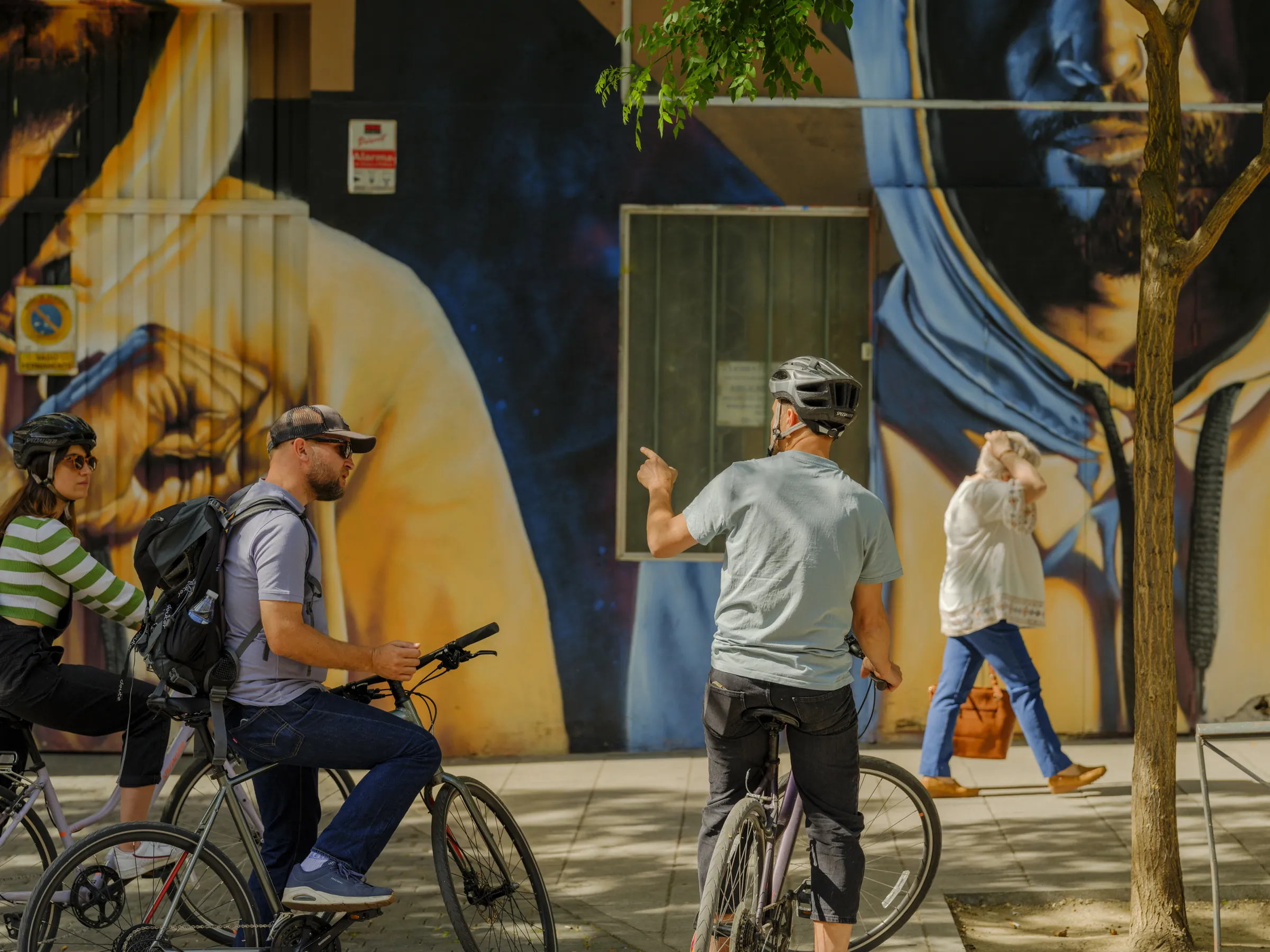
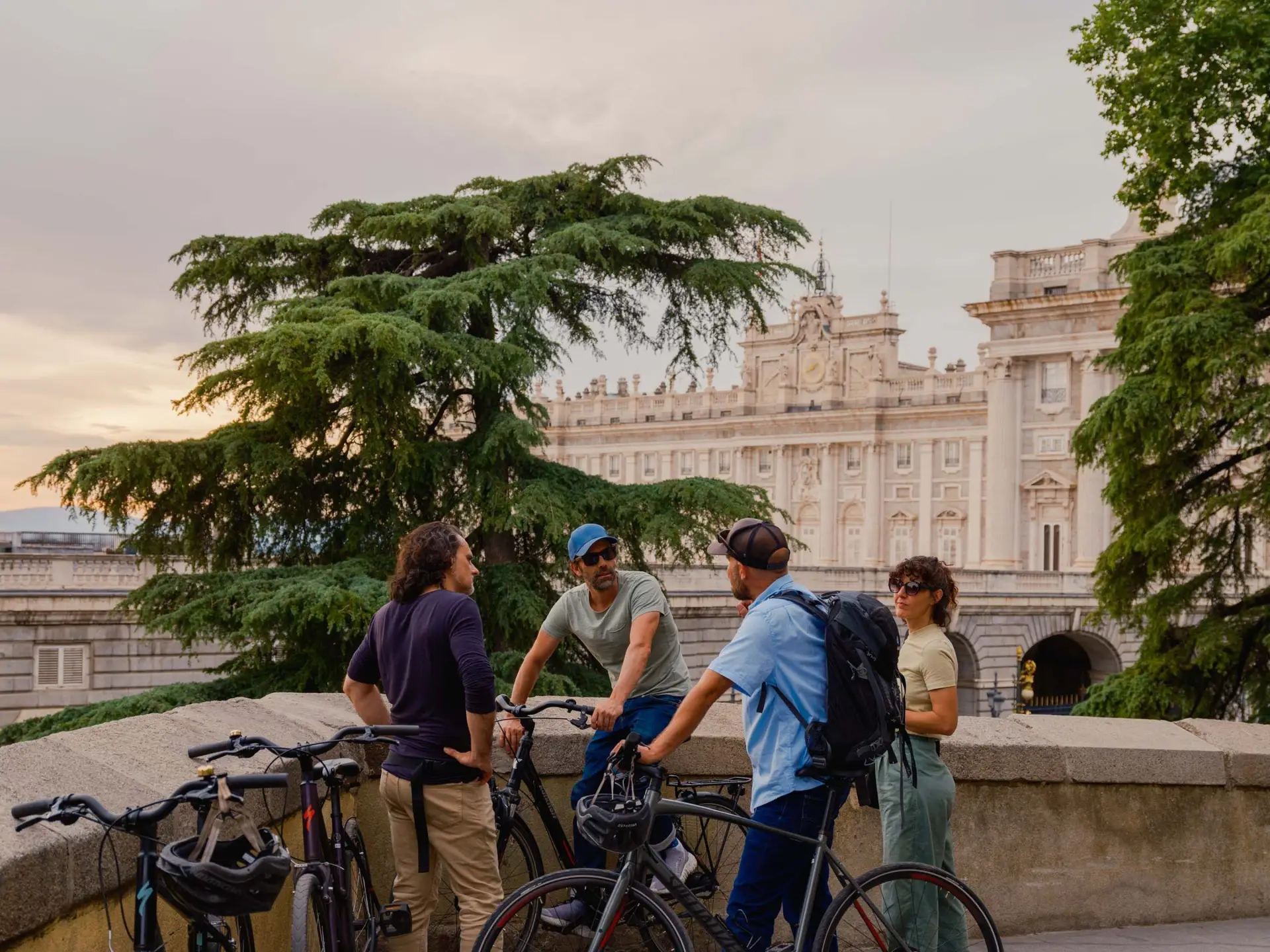
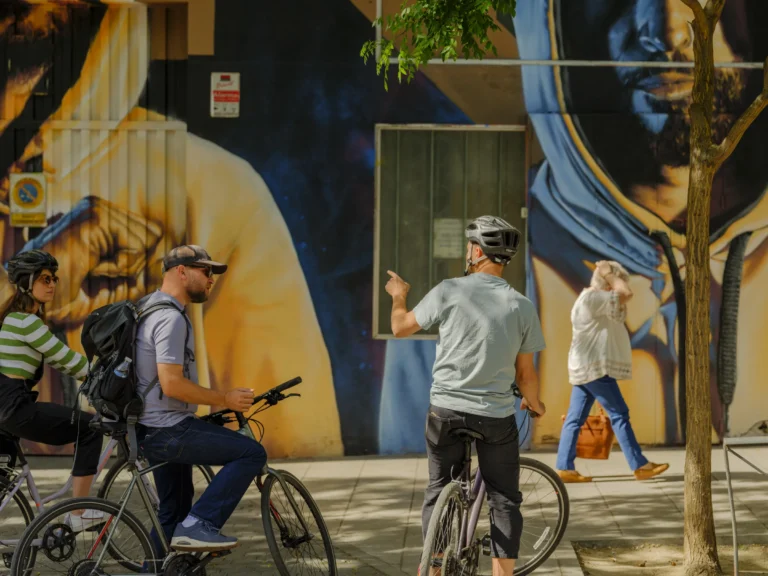
- Route: Retiro is one of the stops, together with the Royal Palace, Madrid Río and the quiet streets in between.
- Group: eight riders maximum. All levels welcome.
- When: daily at 10:00 and 15:00, three hours, in English.
- Included: bike, helmet and your local guide. Rated 5.0 on Google.
- See the Hidden Madrid Bike Tour
Things to do in Retiro Park today
These are the main stops I usually make when I ride through Retiro on my bike tour. You’ll find the rest on the map just below.
Retiro Park map through time: 17 points in chronological order, each with its story.
The Parterre. Philip V commissioned a redesign around 1716 that was meant to cover the whole of Retiro, but in the end it only got as far as what is now known as the Parterre. Had it been carried out across the whole garden, Madrid would probably have something very much like the Luxembourg Gardens in Paris today.
The Palacio de Velázquez. Don’t confuse it with the painter Diego Velázquez: the name comes from its architect, Ricardo Velázquez Bosco. It was built between 1881 and 1883 as the main pavilion of the National Exhibition of Mining, Metallurgical Arts, Ceramics, Glassware and Mineral Waters, and it was designed so it could be reused when the exhibition ended instead of being pulled down. In 1887 it was used again for the General Exhibition of the Philippine Islands, and that same year it became the Overseas Museum.
Today, like the Palacio de Cristal, it’s an exhibition space of the Reina Sofía Museum. It’s an eclectic building: brick in two colours, ceramics, and iron-and-glass vaults that fill the rooms with light. At the entrance, two winged lions flank the white marble staircase.
The Palacio de Cristal, Madrid’s Crystal Palace. It was built in 1887 for the General Exhibition of the Philippine Islands, to show Spaniards their overseas territories. Right now it’s closed for works until 2027. By then, the only major colonies left from the great Spanish empire were Cuba, Puerto Rico and the Philippines, which would all be lost in 1898, plus the Pacific islands (the Marianas, including Guam, the Carolines and Palau) and some possessions in the Gulf of Guinea. At the exhibition, 43 indigenous people from the Philippines and other Pacific islands were also put on display, recreating their daily life in villages set up in the park, as if they were one more exhibit.
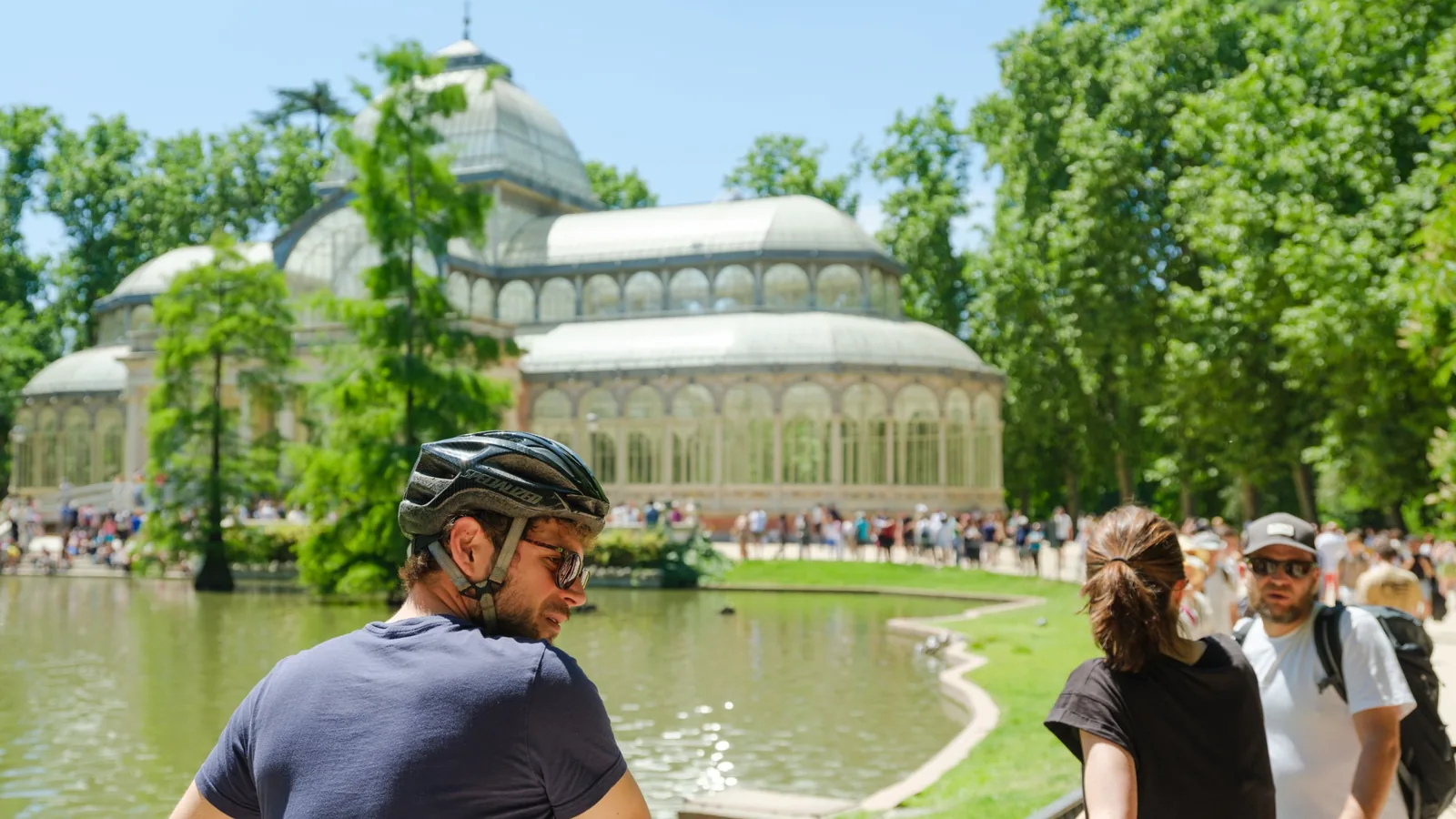
Its design was inspired by London’s Crystal Palace, the iron-and-glass palace Joseph Paxton built for the Great Exhibition of 1851, the first world’s fair in history. That palace was later moved to Sydenham, in south London, and burned down in 1936.
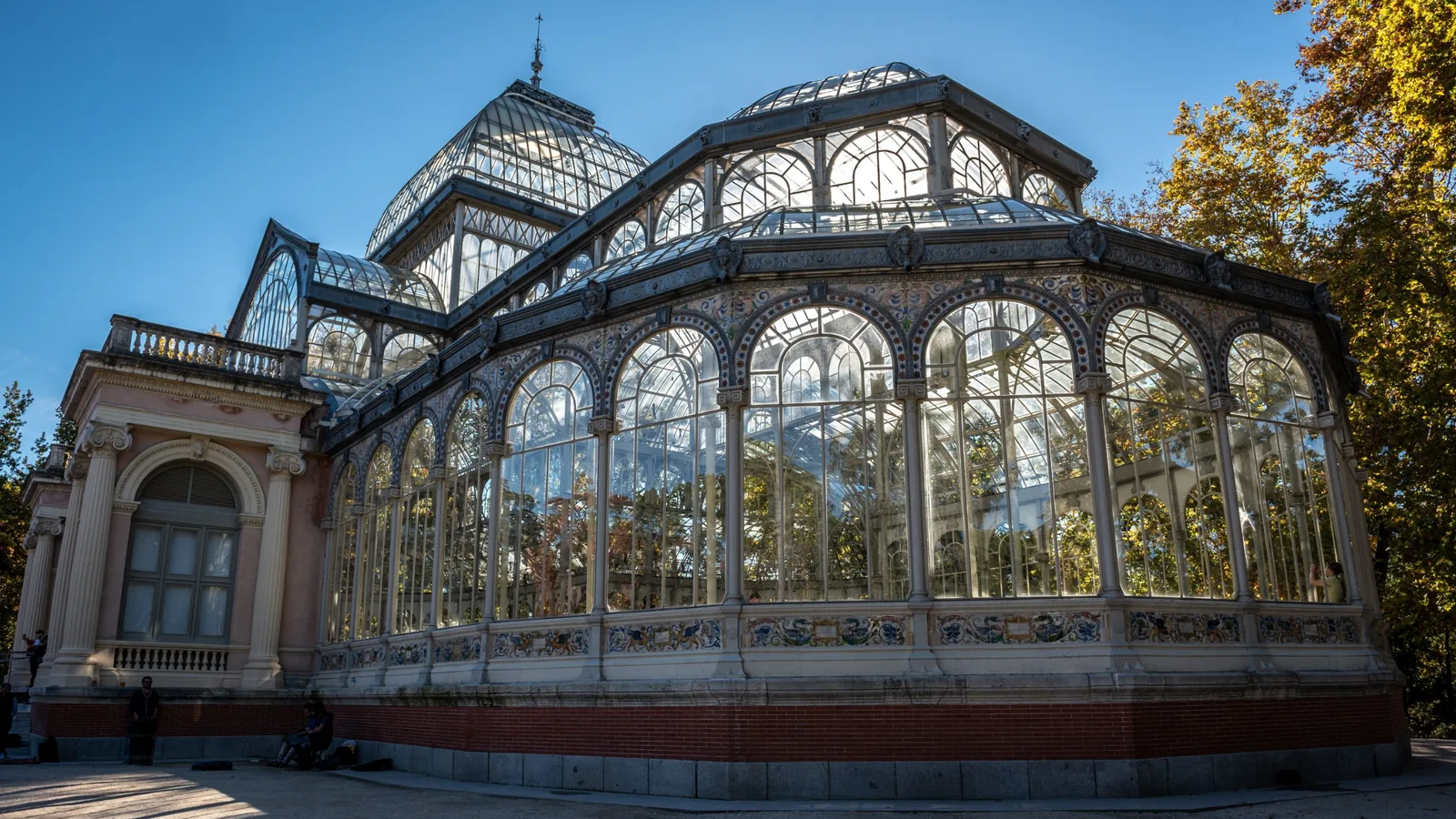
Looking back, this building and its exhibition were a prelude to the end of the Spanish Empire: the so-called Disaster of ’98. After the war with the United States, the Treaty of Paris of 1898 forced Spain to cede Puerto Rico, Guam and the Philippines and to give up Cuba. The Philippines became an American colony and Guam a US territory, which today hosts large military bases. Puerto Rico is now a US commonwealth, and Cuba declared independence in 1902.
The Retiro Pond. Imagine you’re in Venice, taking a gondola ride… well, that was the kind of luxury the court enjoyed here. The Pond was built between 1634 and 1638, and an artificial canal ran out of it: the Canal del Mallo, dug between 1638 and 1639. Gondolas and boats sailed down it to the south, to a pond with an island and a hermitage, more or less where the Fallen Angel statue and the Rose Garden are today. The canal is gone, and its route is now the Paseo de Coches, opened in 1874: a wide avenue where little kids learn to ride a bike. And you can still go out on the water: today anyone can rent a rowing boat at the pier and row across the Pond.
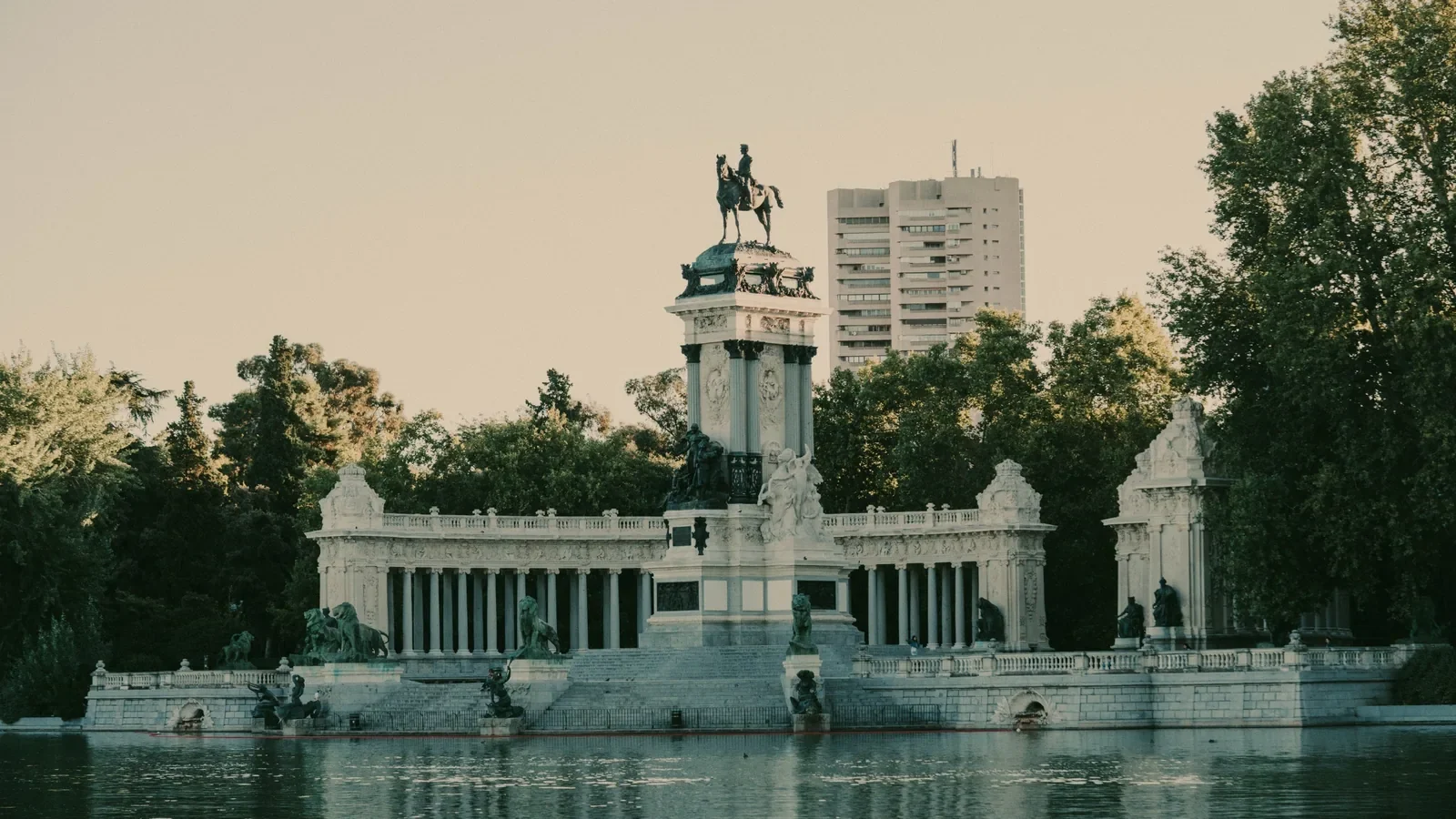
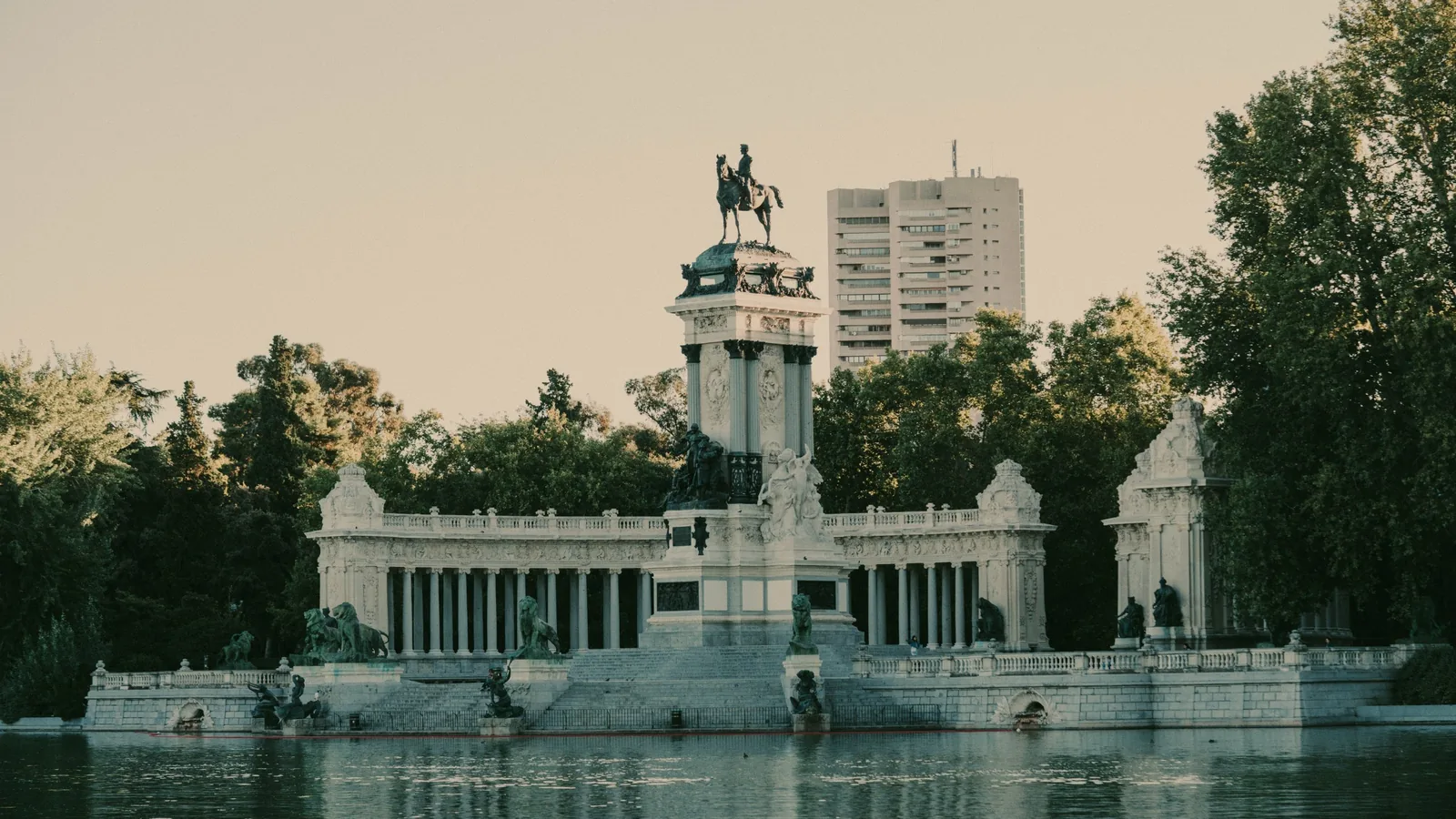
The Alfonso XII monument. It honours King Alfonso XII, known as “the Peacemaker” because the last Carlist war ended under him, in 1876. Keep in mind that the 19th century was a very turbulent time for Spain, with plenty of political instability and one Carlist war after another. The monument came out of a competition in 1902 and was finished in 1922.
The Fallen Angel. Close to the Rose Garden stands a statue of Lucifer at the moment he is thrown out of Paradise, with a serpent coiling around him. Ricardo Bellver modelled it in Rome, inspired by Milton’s Paradise Lost, and it won a first-class medal in 1878. The Crown gave it to the city, the architect Francisco Jareño designed the fountain it stands on, and it was unveiled here in 1885.
The Rose Garden and the Cecilio Rodríguez Gardens. Both are the work of Cecilio Rodríguez, Madrid’s head gardener, who spent his whole life looking after this park. For the Rose Garden he took his inspiration from the one at Bagatelle, in Paris, and built it where there used to be a big greenhouse and a pond that turned into an ice rink in winter. It’s an ellipse with two fountains, box hedges and iron pergolas covered in roses. Today it has some 5,570 rose bushes of 130 species, and in spring it bursts with colour and scent.
Right next to it are the gardens that carry his name, classical in style with an Andalusian feel: hedges clipped into geometric shapes and long ponds. It’s one of the quietest corners of Retiro, and the real owners are the peacocks. They roam free and, if you’re lucky, they’ll spread their tails right in front of you.
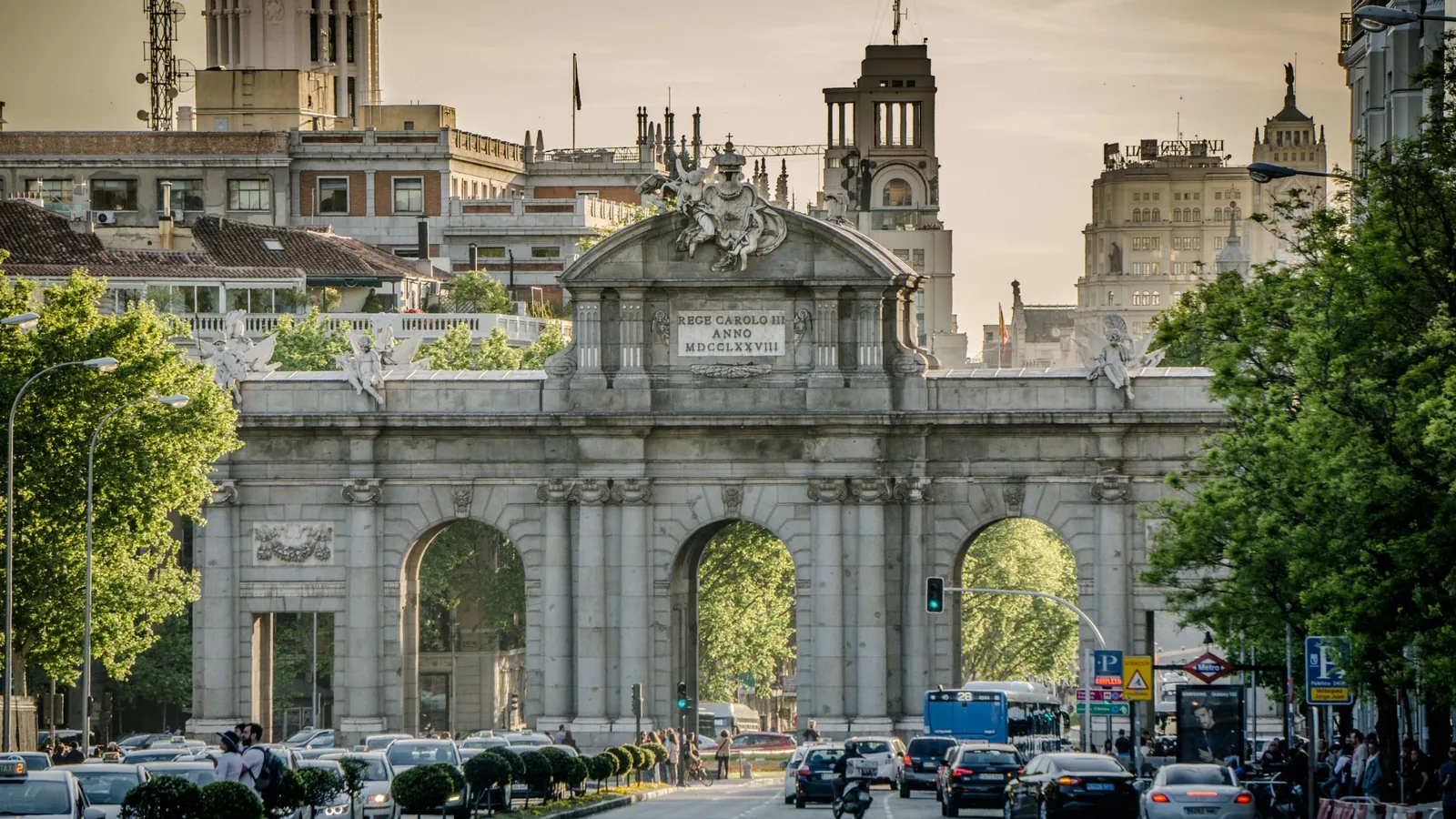
The Puerta de Alcalá. It’s outside the park, but I include it because the two are closely linked. When Charles III arrived from Naples to become king, he entered Madrid through the old Alcalá gate on 9 December 1759, and he didn’t like it at all. He had it torn down and chose Francesco Sabatini’s design himself. The new gate was inaugurated in 1778, as its inscription says, and it’s considered the first modern triumphal arch in Europe, the first since Roman times.
Look at its five openings: carriages went through the three central arches, which were closed at nightfall, and the two side ones were for people on foot. Its two sides are different, too. The one facing east, which travellers saw as they arrived, has ten columns and satyr masks; the one facing the city has lion heads.
Get close to the east side and you’ll see bullet marks. Nobody knows for sure when they’re from: people mention the fighting against the French in 1808, the assassination of Prime Minister Eduardo Dato in 1921 and the fighting of 1939. They’ve been kept on purpose during restorations.
The old bullring. Before Las Ventas, and before the Fuente del Berro bullring (1874-1934), Madrid’s bullring was right here: as you leave Retiro, on your right, some 180 metres from the Puerta de Alcalá, in the area now marked by Calle de Claudio Coello and Calle del Conde de Aranda. Ferdinand VI had it built in 1749, with room for some 12,000 people, and the takings went to the city’s hospitals. It was knocked down in 1874, when the Salamanca district was laid out.
World Heritage. On 25 July 2021, UNESCO declared the “Paseo del Prado and Buen Retiro, a landscape of Arts and Sciences” a World Heritage Site. People call it the Landscape of Light, and it brings together Retiro Park Madrid, the Paseo del Prado, the Botanical Garden and the Jerónimos neighbourhood.
Today the park covers 118 hectares and has 18 gates. Its most famous tree is the Montezuma cypress in the Parterre. Tradition says it was planted in the 17th century and that it’s the oldest tree in Madrid, although a City Council report puts it at around 200 years old.
Riding Retiro Park by bike
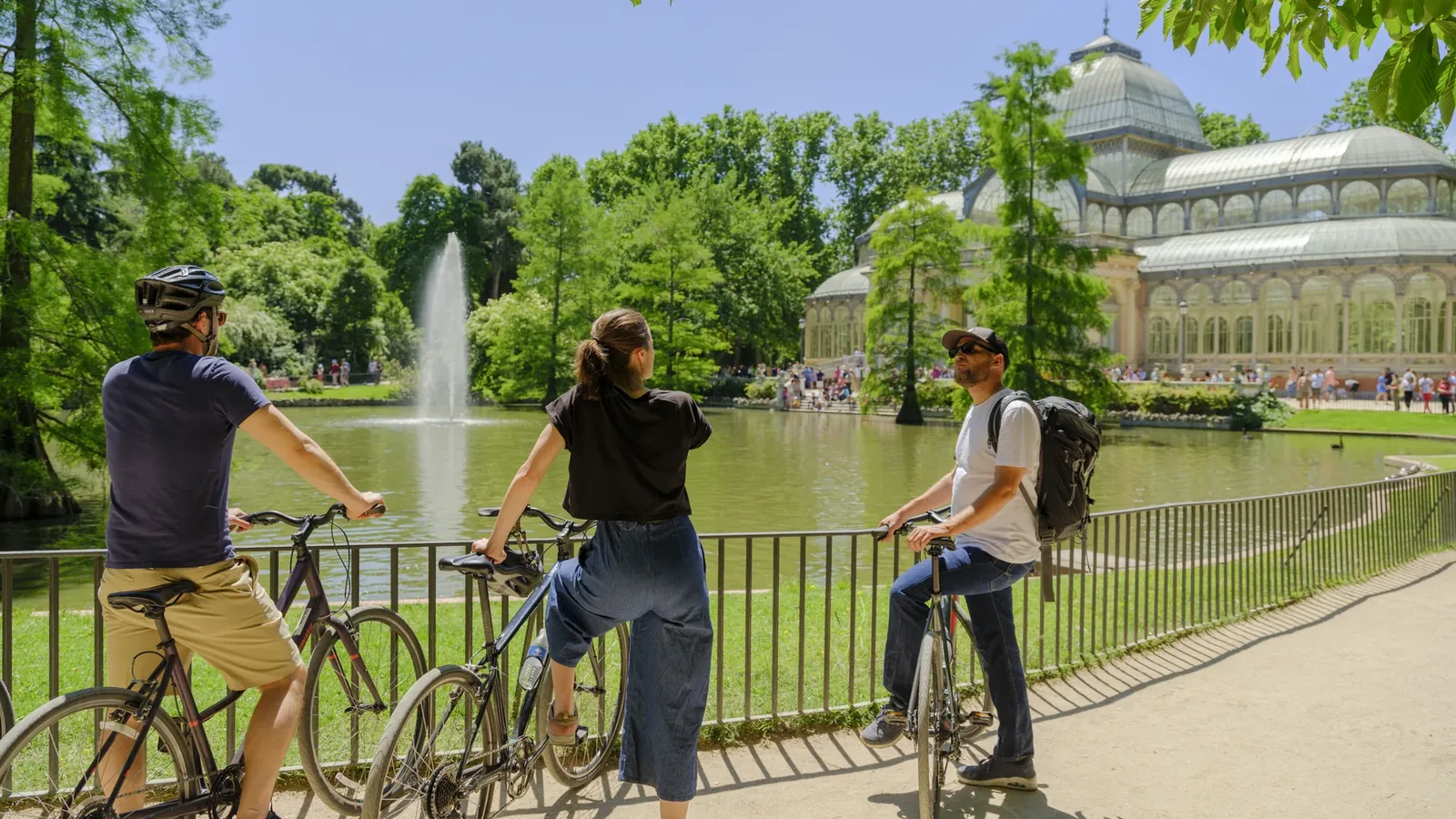
Yes, you can ride a bike in Retiro Park Madrid. If you’d rather have someone tell you the story along the way, that’s exactly what I do on the Hidden Madrid Bike Tour.
If you’re still planning the rest of the trip, all my other Madrid guides are in one place.
When I ride through Retiro on my bike tour, I like to remember how it all began: as the corner a king retired to so he could be alone. Almost four centuries later, it’s the exact opposite, everyone’s park. In a single ride you can read a good part of Spain’s history: a favourite’s whim, a war, a revolution and an empire saying goodbye in a palace of glass. What was born for one person ended up, as that 1868 decree put it, for “the recreation of the neighbourhood”.
Frequently asked questions
What is Retiro Park famous for?
Retiro Park Madrid is famous for its history and for everything you can see inside. It started as the garden of Philip IV’s Buen Retiro Palace and has been a public park since 1868. Inside you’ll find the Palacio de Cristal, the Great Pond with the monument to Alfonso XII, and the Rose Garden. Since 2021 it’s been part of a UNESCO World Heritage Site, the “Paseo del Prado and Buen Retiro, a landscape of Arts and Sciences”.
Is El Retiro Park worth visiting?
Yes. El Retiro Park Madrid is free, it sits right next to the Prado, and in one walk you see four centuries of history: a royal palace garden, the Crystal Palace, the Great Pond and the Rose Garden. If you only have time for one park in Madrid, I’d pick this one.
Is Retiro Park free, or do you need a ticket?
No ticket needed. Entry to Retiro Park Madrid is free and the park is open every day. According to esMadrid, the city’s official tourism website, it’s open from 6:00 to 24:00 from April to September, and from 6:00 to 22:00 from October to March.
How much time do you need in Retiro Park?
To see the main stops on foot (the Crystal Palace, the Great Pond, the Fallen Angel and the Rose Garden), give it two to three hours. By bike you can do it in about an hour.
How much does it cost to rent a boat in Retiro Park?
According to esMadrid, a rowing boat on the Great Pond costs €6 from Monday to Friday and €8 at weekends and on public holidays. Each ticket is for 45 minutes and up to four people. Boats run every day from 10:00, with a break at midday.
Which is bigger, Central Park or Retiro Park?
Central Park. It covers 341 hectares (843 acres), almost three times the 118 hectares of Retiro Park Madrid. Retiro is older, though: work on it began in 1630.
What is the Crystal Palace in Madrid, and can you visit it?
It’s an iron-and-glass greenhouse that Ricardo Velázquez Bosco built in 1887 for the Philippine Islands Exhibition, inspired by London’s 1851 Crystal Palace. Today it’s an exhibition space of the Reina Sofía Museum, and entry is free. According to esMadrid, it’s closed for works until 2027.
Which king is on the monument by the Pond?
Alfonso XII, known as “the Peacemaker” because the last Carlist war ended under him, in 1876. The monument came out of a competition in 1902 and was finished in 1922.
Can you bike in Retiro Park?
Yes, you can ride a bike in Retiro Park Madrid. It’s also how I show it on my Hidden Madrid Bike Tour.