
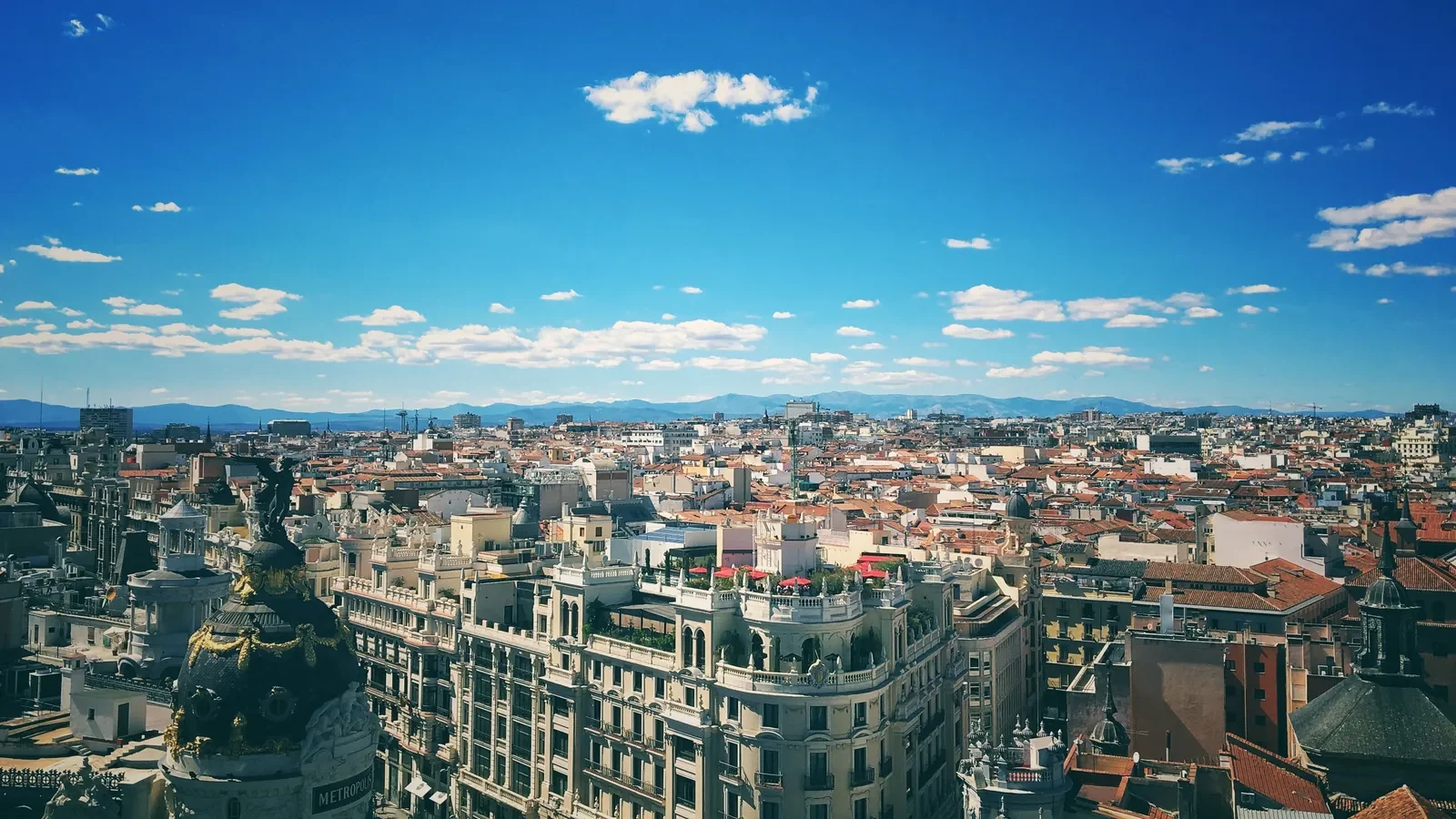
I always say that I have been riding across Madrid for 12 years, though in truth it is a good deal longer. The ride I enjoy most, like any cyclist, is the one with nobody behind me and no timetable to keep. None of these stops is a secret, but, spread out across the map as they are, they are not comfortable if you set out to do them on foot (unless you want an intense cardio session, or to hit the 10,000 daily steps of whichever health app you use). At some point you will run into the dilemma of sacrificing one of them, either for convenience or because it is time to eat. On a bike you can ride them all in one morning, at your own pace, with your own stops for coffee, and that is the reason I am sharing this article.
I have ordered the stops the way I would ride them myself, roughly in a figure of 8, so that you also discover the less touristy, more human Madrid. Starting at Conde Duque, dropping down to the Temple of Debod, and from there to El Rastro and La Latina to refuel with a beer and a good tapa. With the tank full, you will cross Lavapiés, weaving through its streets until you reach the old Delicias station and the hidden park behind it, and from there the Matadero. You will not need to refuel there, because you will have come all the way down the hill to the river and discovered that Madrid is not flat. But once you set off along the Madrid Río park, you will have the chance to stop for something on a terrace, unless you hold out for the lake at Casa de Campo. That is my favourite place to switch off, pure nature just five minutes by bike from a centre full of tourists.
One thing before we start: this is not the famous Madrid. There is no Plaza Mayor here and no Prado. There is a route, in the order I ride it, and what you need to know to ride it yourself.
If it is the famous Madrid you are after, you will find it in the rest of my Madrid guide.
AT A GLANCE
- The stops: Conde Duque · Temple of Debod · La Latina, El Rastro and Lavapiés · the Railway Museum and the hidden park · Matadero · Madrid Río · Casa de Campo
- Distance and time: around 13 km from Conde Duque to the lake at Casa de Campo. The riding itself is little over an hour; how long the morning takes is up to you and how long you sit down.
- The day matters: El Rastro only exists on Sundays and public holidays, and that is not a day to ride into it. Cultural centres close on Mondays.
- Difficulty: flat almost throughout, except the climb back up from the river to La Latina.
Why unusual things to do in Madrid ask for a bike
On a map you will see that the straight-line distance between some of the stops is not that great, but even so it would be impossible to take them all on, at least for me, and that is without taking into account the gradient that no map or app shows you. Even so, there are people who do it and I admire them, but with only a few days I would rather ride and enjoy it at a calm pace than wear myself out trying to see it all on foot.
With a bike the picture changes completely: the riding not only becomes part of what you came to see, but you will discover another Madrid, with its most pleasant corners, the ones you would not even know existed on foot. The metro that saves you the hill runs exactly underneath them.
1. Conde Duque, the barracks that became a cultural centre
You get there weaving through the streets of Malasaña, and that stretch is already half the reason to start the day here, because it is when you see the early-morning side of Madrid. At the end of the weaving, Conde Duque appears, a building enormous in its extent and even so hidden inside the neighbourhood.
My favourite part is having a coffee sitting in the square, right opposite the main entrance, while I imagine the bustle of the barracks and the soldiers coming in and out through that same door.
Because that is what it was. Its location helps you get an idea of how far Madrid reached at the end of the 18th century: being out on the edge of town, you know the Royal Palace is close, since its job was to protect it quickly.
Today, as well as a cultural centre, it houses the Museum of Contemporary Art of the city of Madrid, which is not to be confused with the Reina Sofía.
2. The Temple of Debod, and what an Egyptian temple is doing in Madrid
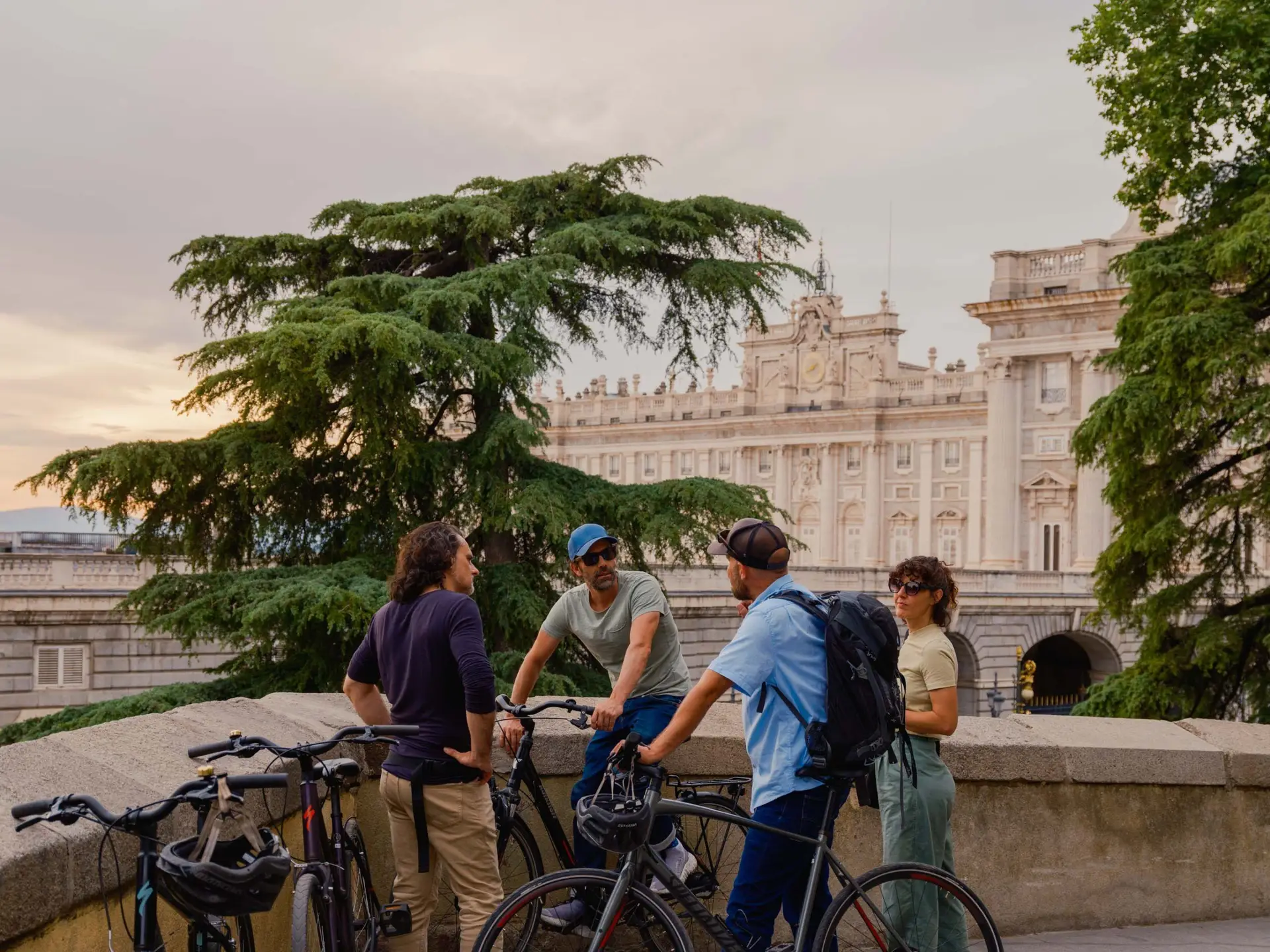
This place is one of my favourites for one of the best sunsets in Madrid, and also for the view it gives you south across the city and how far it stretches. But I also like to single it out because it is the best place to understand why Madrid was founded where it was, which is a story I prefer to tell on the ground, and because it explains how geopolitics works and how Franco’s dictatorship returned to the international stage after the Second World War, all because of a dam in the middle of the Egyptian desert.
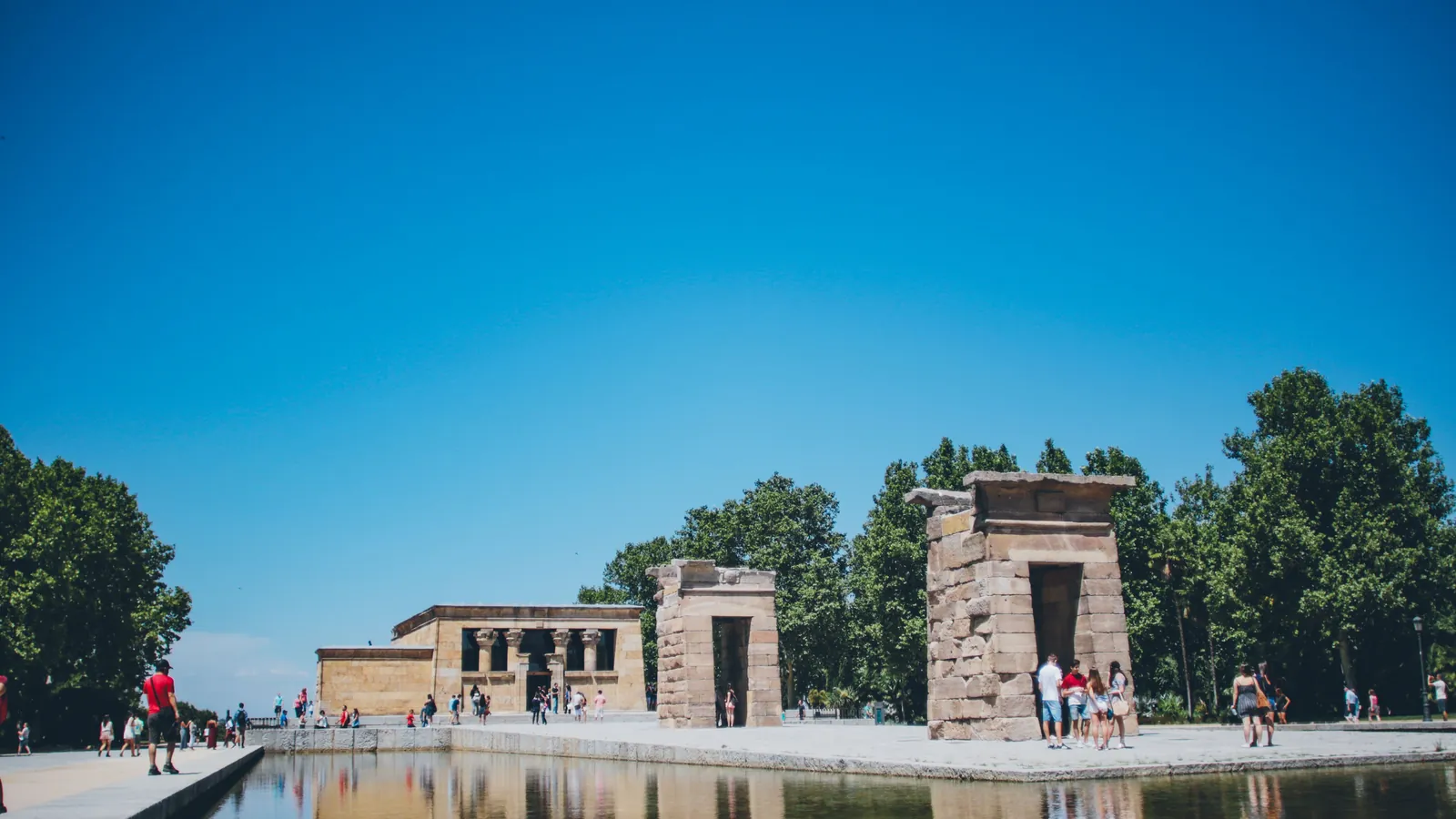
In the mid-1950s, with the Cold War barely under way, the United States and the Soviet Union began to move their chess pieces, and one of those pieces was Spain: in September 1953 Washington signed the agreements with Madrid that gave it five military bases on Spanish soil, today under the NATO umbrella, in exchange for economic aid and the end of the dictatorship’s isolation. A few years later, when it became clear that the Aswan Dam was going to swallow the temples of Nubia, UNESCO launched an international campaign that more than fifty countries joined, and Spain sent its archaeologists out there. But let me be clear: for Franco this was not about culture, it was about cleaning up his image before the world and, above all, about selling to Spaniards themselves the idea that his dictatorship now sat down with everyone else.
Thanks to those archaeologists, Spain was one of the four countries — along with the United States, the Netherlands and Italy — to receive a temple. The other three ended up inside a museum. Ours is the only one you can see in the open air, and you have it right in front of you.
And if you want to know why Madrid is where it is, that is one of the stories I tell on the ground: the Temple of Debod is also one of the stops on the Hidden Madrid Bike Tour, which afterwards drops down through the old town instead of crossing to the river.
3. La Latina, El Rastro, Lavapiés and the Sunday like no other
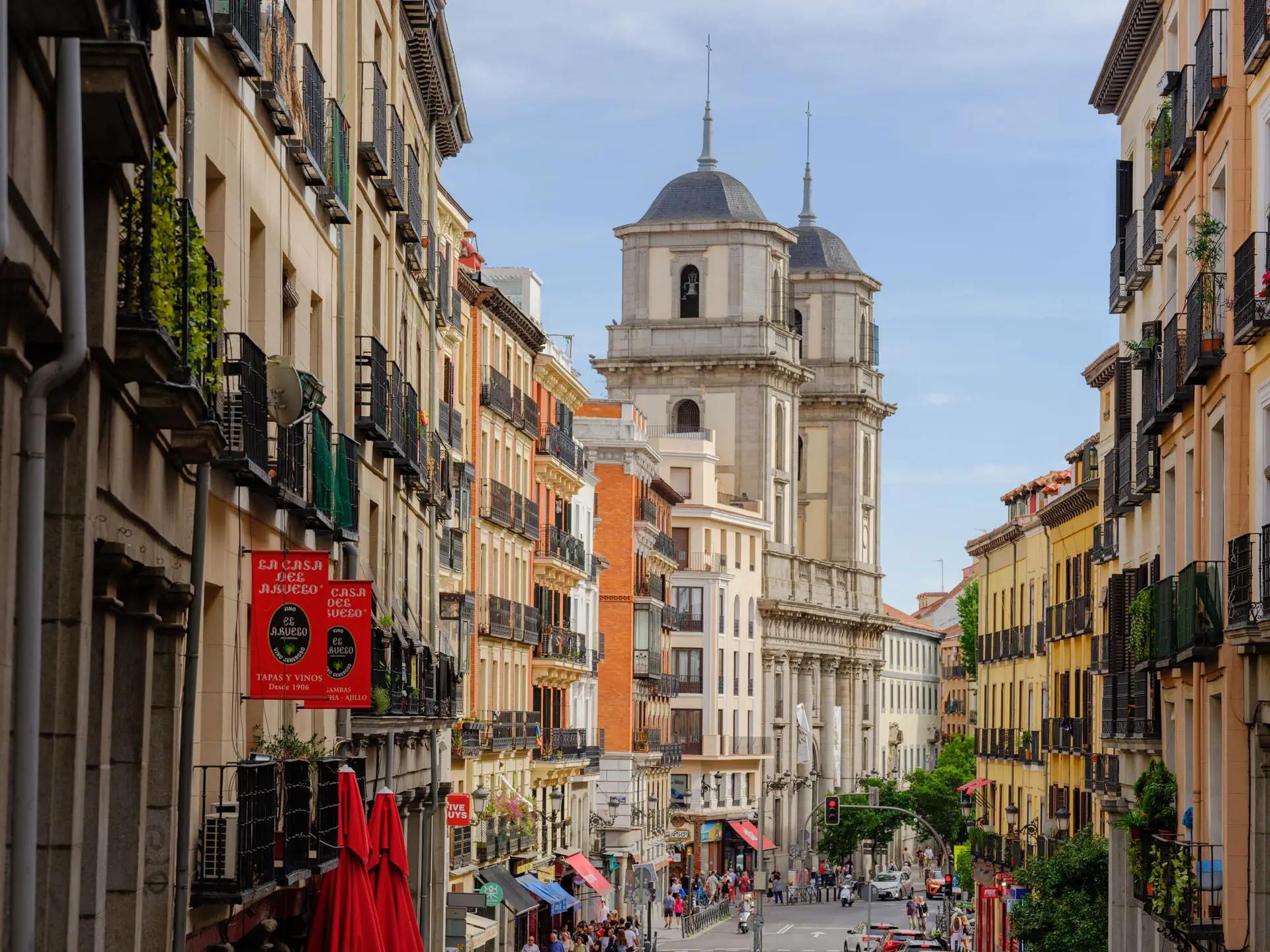
If you look at a map of La Latina, you will see that the layout of its streets is completely arbitrary, to the point that some of them are not really streets but a filled-in ditch: Cava Baja, Cava Alta and Cava de San Miguel were traced over the ditch that surrounded the Christian wall of the 11th and 12th centuries. Today Cava Baja is the famous one, the one with the bars, and it still traces exactly that curve.
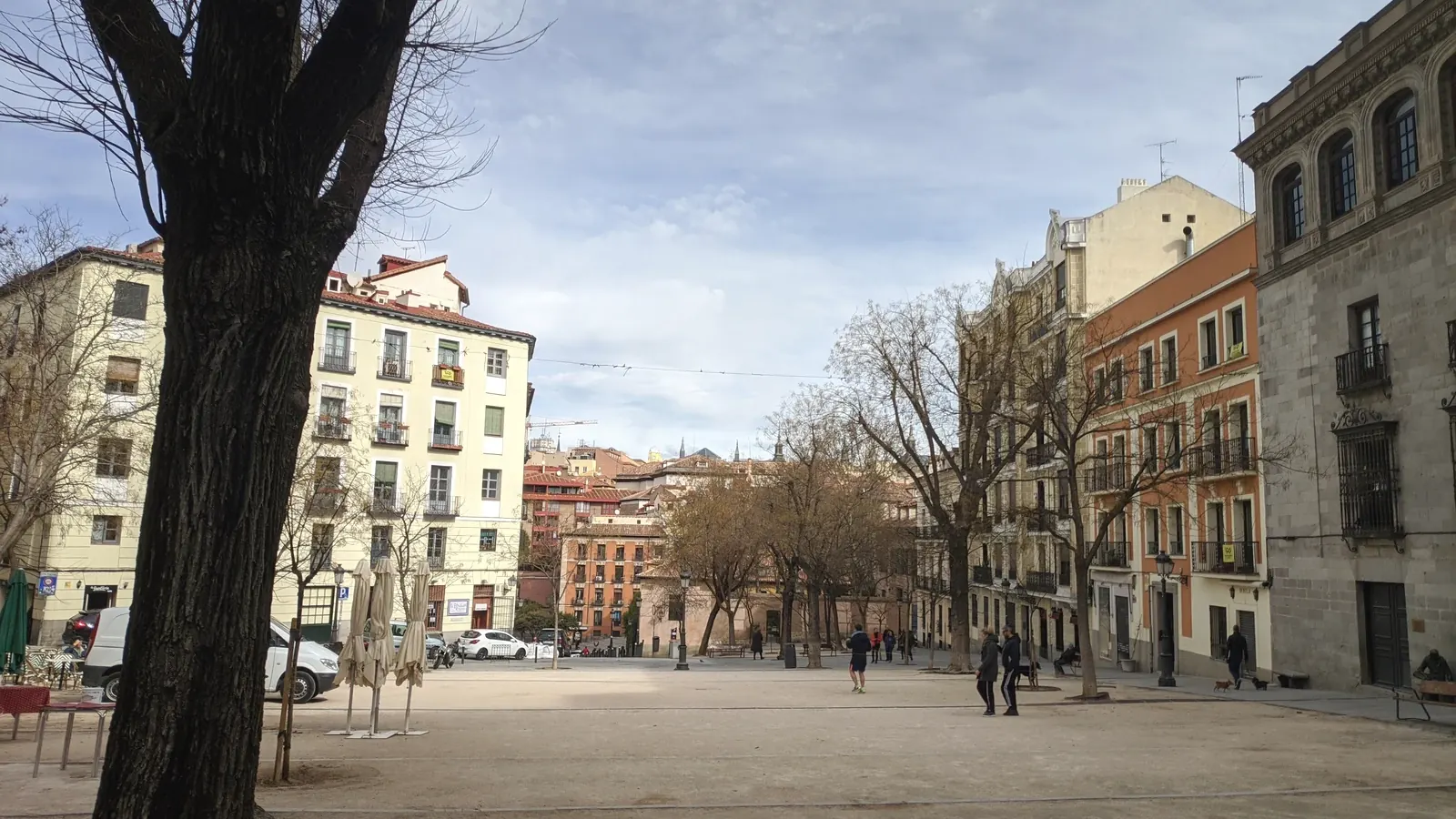
Here you can stop on a terrace, at the San Isidro Museum, which is called precisely The Origins of Madrid, or at the Cebada market, which is tapas the way San Miguel does it but in local mode and without so much Instagram.
El Rastro, the border between La Latina and Lavapiés, marks, like Conde Duque, how far the city reached before the Court settled here. And the name is cruder than it sounds. Cattle were dragged along these streets to the tanneries of Ribera de Curtidores, and the trail of blood they left behind is the rastro.
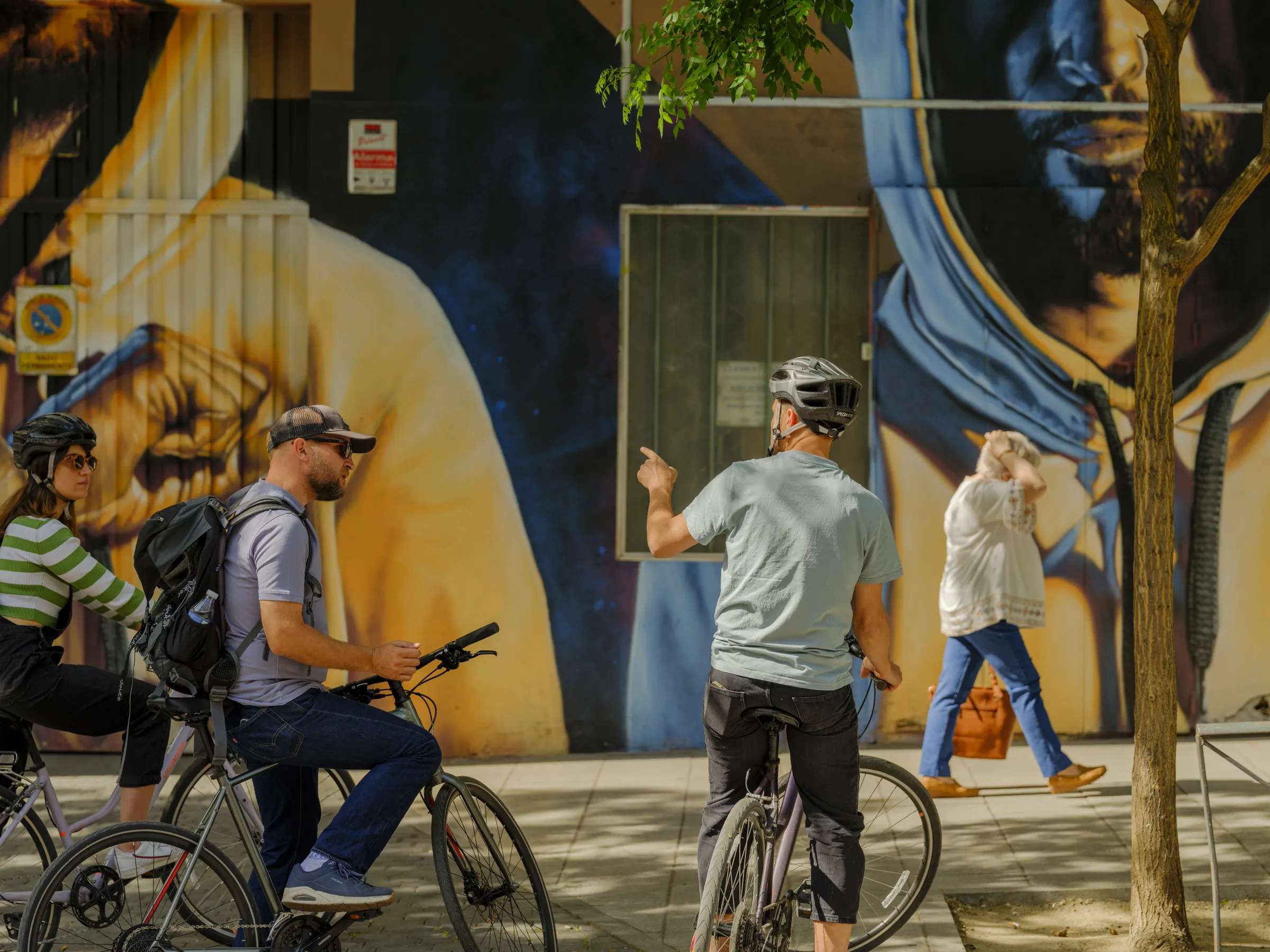
And on Sundays this is like nothing else: the flea market takes over Curtidores and all the streets around it, Sundays and public holidays from nine to three, and when it packs up people go up to the taverns of Cava Baja or down towards Lavapiés. Take this piece of advice: do not even think about riding here on a Sunday, you will regret it. And if you weave down towards the Matadero, Lavapiés will make an impression on you for its contrast and its diversity. It is where I most like to meet up, on Calle Argumosa and the streets around it.
4. The Railway Museum and the hidden park
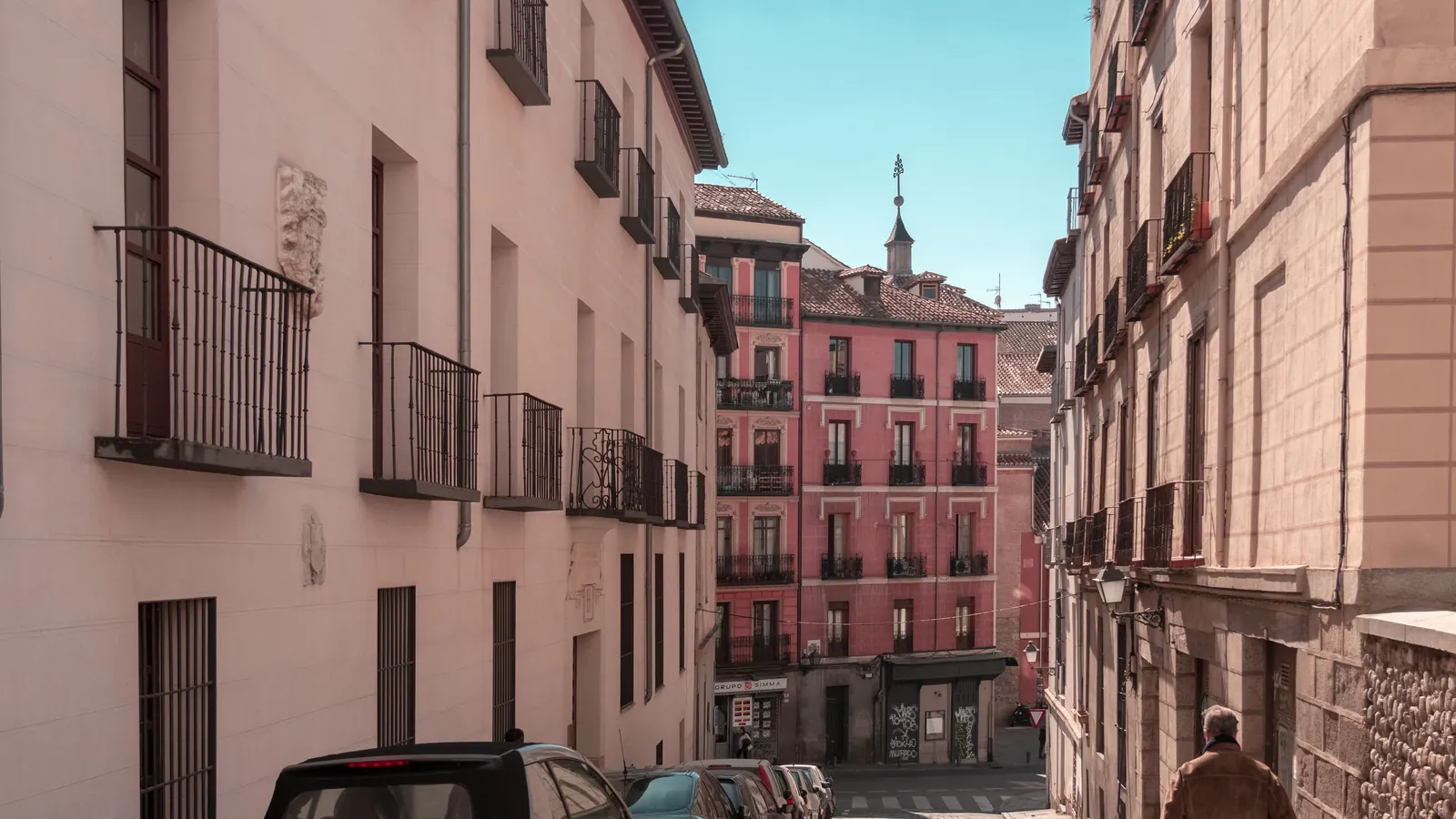
Halfway towards the Matadero you will come across one of the least known areas of Madrid, the old Delicias station. Opened in 1880 and designed by the French engineer Émile Cachelièvre, it was the first station in Madrid with a metal structure. It stopped running in 1971, ninety-one years later, and since 1984 it has been the Railway Museum. Inside you will find steam locomotives, diesel engines and passenger carriages standing under the original train shed, and you can climb aboard several of them. Believe me, it is more impressive than it sounds.
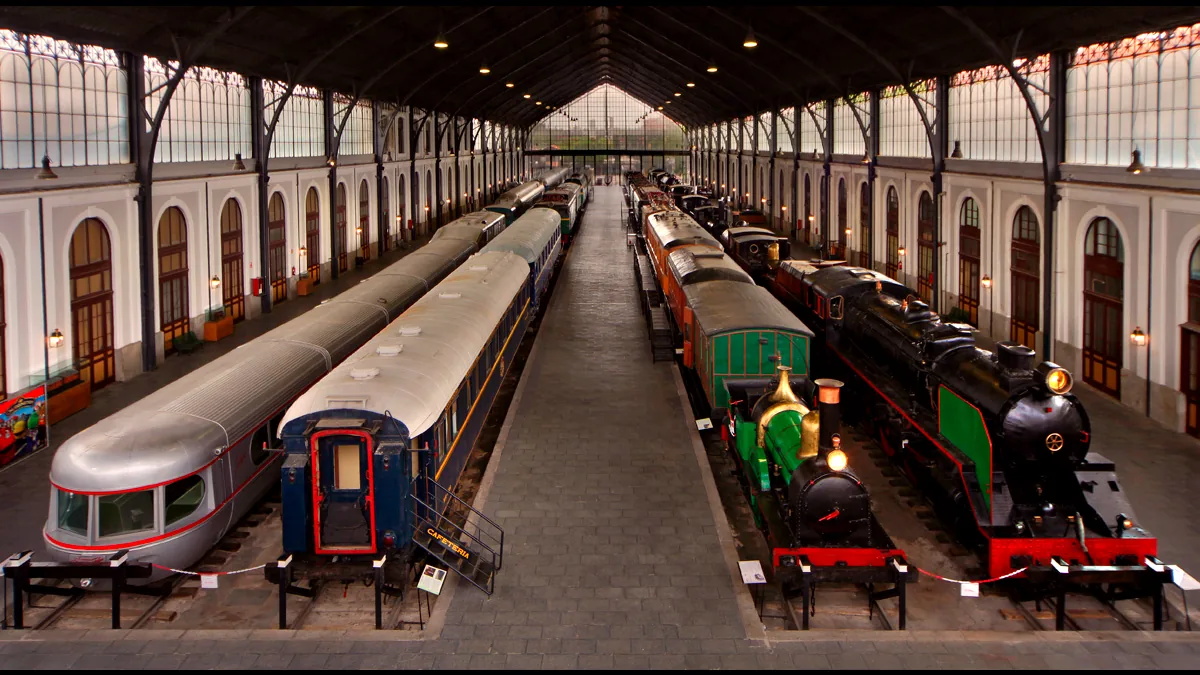
What is interesting is that it is not only the station but its whole extent that was converted. If you follow the old tracks, you will see that the park behind keeps its avenues along the old halts, and the rails set into the ground guide you towards the Enrique Tierno Galván park, forty-five hectares that almost nobody walks through and where the best of it is underneath: this rise was called cerro de la Plata because of the soot thrown out by the steam trains from Atocha and Delicias, so you are riding on the soot of the railway.
5. Matadero, where cattle were slaughtered and films are now screened
Coming all the way down the hill and right next to Madrid Río, you will run straight into an enormous disused water tank and a giant sign announcing MATADERO.
You have just arrived at one of the most active and impressive cultural centres in Madrid, not only for what it programmes but also for its origins and its architecture. Built between 1911 and 1925, following the German model of slaughterhouses, it is one of the finest examples of neo-Mudéjar architecture in the city, with exposed brick and Toledan masonry. Its saddest chapter is that it also worked as a detention and sorting centre for beggars after the Civil War.
Today there is cinema, theatre, exhibitions and workshops inside, and what I like most is that nothing has been disguised: you walk into a hall and the tiles, the beams and the floor drains are all still there, because since 1997 the site has been listed at structural level and the structure could not be touched. So you end up watching a film sitting exactly where the butchering was done.
And this is where you see the seam of the city: in a little over a kilometre you have passed the station that brought the coal, the park made from its soot and the factory that fed Madrid, the three of them built in the same years and the three of them brought back to life doing another job.
6. Madrid Río, the park that buried a motorway
Madrid Río is one of the most ambitious urban transformation projects in Europe: it buried more than 6 km of the M-30 ring road and with it removed the barrier of asphalt and traffic that divided the southern neighbourhoods from the centre of the capital in a way nothing could cross.
In 2016 it won the Veronica Rudge Green Prize in Urban Design, awarded by Harvard University: more than one hundred and twenty hectares taken back from the asphalt, more than twenty bridges and footbridges that stitch the neighbourhoods of the two banks back together on foot, and more than nine thousand pines planted in the Salón de Pinos alone.
Since 2016 all the weirs have been left open to allow the river to run naturally, bringing an ecological benefit without precedent, with the immediate and natural return not only of the vegetation but of sandbank islands and a rich wildlife. All of it has turned the heart of Madrid into a living ecological corridor.
7. Casa de Campo, the forest Madrid keeps behind the river
Casa de Campo is the largest public park in Madrid. To give you an idea, it is 5 times bigger than Central Park. Until 1931, with the arrival of the Second Republic, it belonged to the Royal Family. Its origin lies with Felipe II, who bought the estate as a private hunting ground next to the Real Alcázar, the court palace of the time, on whose site the Royal Palace you see today would be raised centuries later.
Access is heavily restricted for motor vehicles, limited to a very small area, and the rest is reachable solely and exclusively on foot or by bike. In other words, it is where people from Madrid go hiking, running, gravel riding, mountain biking or road cycling from Monday to Thursday.
A special mention for the lake at Casa de Campo and its restaurants, with terraces looking out over the Royal Palace, exactly as the kings who came afterwards saw it.
People always ask me the same three things before riding here: whether you need to be a cyclist, what happens if it rains, and how safe Madrid is on two wheels. I answer all of them on my Madrid bike tour FAQs.